This weekend, I curled in the 2nd annual Queen City Color Games at the Charlotte Curling Club—our Pride Bonspiel. Teams came from all over—California, New Jersey, Maryland, Georgia, Nebraska, South Dakota, and, of course, North Carolina. It’s a joyful, love-filled celebration of LGBTQIA+ curlers and allies. And while it’s a “funspiel,” the kind with funky rules and wild costumes, it’s also something much deeper: it’s a space where being fully yourself isn’t just tolerated—it’s expected. It’s embraced. When it ended, I didn’t just feel grateful. I felt a quiet ache—because I realized how rare and sacred that kind of space is. A space where no one has to shrink. Where no one has to explain who they are. Where belonging isn’t earned—it’s assumed and it is respected.
And that got me thinking…
So here’s my story. Bear with me. I ramble. I meander. I wander about before I get to the point, and I talk too much—but I promise I’ll get there.
When I was a kid, I was an athlete. I started swimming competitively when I was four, and by ten, I was practicing twice a day and lifting weights. I was good—probably better than good. I had Quad-A times in backstroke and breaststroke before I hit double digits. I still might hold a record at my old summer pool in backstroke. In college, I realized my 15-16 breaststroke time beat the record on the wall at Clarion’s pool, whatever, I guess maybe I should have been a swimmer. But that’s not the point.
I picked up softball around ten, then volleyball. Again—good. Competitive. Driven. If you know me, you know: I like to win. I worked hard, I played harder, and I loved every second of it. I was strong. Fast. Lean. The kind of kid who could throw a football better than most of the boys and outrun just about anyone in gym class.
And that’s when things started to shift.
Junior high hit—and suddenly, being athletic wasn’t cool anymore. Not for girls. Not in the early ’90s. Today we’re starting to celebrate female athletes, but trust me—we didn’t back then.
My nickname became “Leaman”—a jab at my strength and build. My short haircut didn’t help. Curling my bangs and teasing them out over a bowl cut couldn’t mask it. But I tried. I invested in that purple hairspray with the kangaroo on the can, and I looked mostly ridiculous for most of junior high and high school.
But dammit, I wanted to fit in.
I can still smell that horrid grapeness when I think about seventh grade.
And it didn’t help—not really. No amount of hairspray or makeup could cover who I was.
I was called a boy. A lesbian. A dike.
I didn’t even fully understand those words at the time—but I knew they were meant to cut.
To other me.
So I guess I did what a lot of kids do—I tried to shrink myself. I tried to fade into the background and be less… me and more… them.
I stopped working so hard. Hell, I even got kicked off my swim team for something stupid—a cute boy I had a crush on told me to drop a weight down the stairs, and I did. I’ll never forget my coach’s last words: “You wanted to quit, Leanne. So just quit.” I remember walking out to my mum’s car after practice, knowing it was over. Knowing they had already paid through the month—and that would be an issue. But I didn’t care. I was over it.
I wanted to be liked. I wanted to be wanted. I wanted to blend in, not stand out. And somewhere along the way, I started to resent the very thing I used to love most about myself.
That’s not a pity story. I’m not sharing it for sympathy. I’m sharing it because—while that nickname stung, while that teasing changed some things for me—I could walk away from it. I could brush off the labels because they weren’t true for me. I wasn’t gay. I wasn’t different, not in the way they meant. The insults were misfires. And eventually, I grew out of them.
But here’s the thing.
What if I wasn’t straight?
What if I was that kid—that teammate, that friend—who those labels stuck to because they weren’t insults… they were my identity? An identity I had to hide. An identity I couldn’t laugh off or join the teasing from the sidelines. An identity that made me feel othered in spaces that were supposed to be safe.
What if I couldn’t brush it off?
What if, at 13 or 14, those words didn’t just sting—they burrowed in and told me I didn’t belong?
What if they made me question my own worth?
As an adult, I’ve been lucky. I’ve built a life I’m proud of—a career I love, a partner who grounds me, and a sense of self that took decades to grow into. But maybe more than anything, I’ve built friendships that last. The kind that don’t flinch when life gets hard. The ones you carry with you to the grave and beyond.
Y’all, I have friends I’d take a bullet for. Friends who’d help me bury a body (kidding… mostly).
They’re the people who make my world beautiful.
Who give my life meaning.
They’re the people who see all of me—and choose me anyway.
They remind me, every single day, that there is still light and love in this world.
And they are worth fighting for.
And if you find yourself judging—whether it’s this post, this event, or the LGBTQIA+ community as a whole—I’d invite you to pause.
Ask yourself what that judgment is rooted in.
Because if it comes from fear, or tradition, or something you were taught long ago—I get it. That’s real. We’re all raised to believe in something. Our lives are built on the foundations laid by our parents, our churches, and the geopolitical landscape we grew up in. And that’s hard to shake.
But so was my fear of spiders.
And the deep end of the pool after I saw Jaws.
Sometimes our fears aren’t real.
Sometimes they’re invitations—to question the world around us, to expand our beliefs, to build systems that are more compassionate and more robust.
Sometimes fear is just a construct—rooted in old stories and ancient hurts we were never meant to carry forever.
Any good therapist will tell you: fear binds you. It holds you back.
But with enough practice, it can be overcome.
And fear—real or imagined—is not a reason to deny someone else dignity, safety, or love.
You don’t have to understand someone’s identity to honor their humanity.
So here’s what I want to say and am finally getting around to…
Some of my friends are straight. Some are gay. Some are trans. Some are nonbinary. Some are Black, Brown, White, Neurodiverse, or Disabled. And here’s the truth: I love my people fiercely. I love them not in spite of who they are, but because of it. And I hope—deep in my bones—that I’ve been the kind of friend they can count on. The kind that shows up, not just in comfort, but in courage.
And lately, I’ve been thinking a lot about what it really means to be an ally. Not just a safe person. Not just someone who “accepts” others. But someone who actively refuses to let hate or exclusion go unchecked.
Because when I think about that 13-year-old version of me—hurt by a nickname but able to walk away from it—I realize what a privilege that was. I wasn’t targeted for who I was. I was targeted for what people assumed.
And yes, that hurt. But it wasn’t soul-deep. It didn’t threaten my safety, my future, or my place in the world. It may have changed me—but honestly, I can’t even say for sure.
What I can say is that it stayed with me. It still does.
It shows up in the quiet calculations. The moments where I weigh what I can say and what I can’t. Where I toe the line to stay safe. Where I hold back because of fear, because of image, because of self-preservation.
And I get it. I get why people stay quiet. I’ve done it too.
But I also know this:
I can’t be an ally.
I can’t be a friend.
I can’t stand up and fight if I’m still hiding behind that fear.
So here it is. So here’s what I want to say.
For so many kids, that fear, that “otherness”, that lack of belonging – it exists and persists and resonates. Every day. All the time. In every moment.
And that’s why spaces like our Pride Bonspiel matter. That’s why allyship matters. Not just in June. Not just at one event. But in the way we live, love, parent, teach, coach, vote, speak, and show up.
If you’ve never had to question whether you belonged in a locker room, on a team, at a family dinner, or in your own church—you’re already playing with privilege. That doesn’t make you a bad person. But it does mean you have a responsibility.
Because allyship isn’t passive. It’s not a rainbow sticker or a hashtag or a one-time event. It’s action. It’s speaking up when it would be easier to stay quiet. It’s making space when you’ve always had it. It’s listening—really listening—when someone tells you what it’s like to be “othered.”
It’s about creating more spaces like this bonspiel. Spaces where love shows up in funky costumes and everyone belongs just as they are.
I’m still learning. Still listening. Still trying to do better.
But I know this much:
You are safe here.
You are loved here.
You belong here.
And if I’ve missed the mark—if I’ve made this more about me than I meant to—please tell me. I want to do better. I want to be better. That’s what allyship means to me.
Selah.
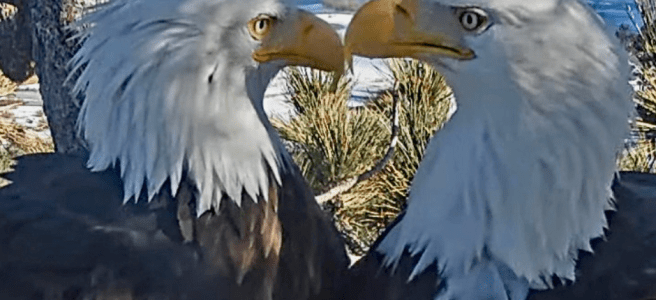
 Aspen – For the trees that tremble but don’t fall. Resilient. Rooted.
 Zephyr – A soft wind that carries you farther than you ever imagined.
 Marin – Of the lake, of the calm, of the quiet strength below the surface.
 Solace – For the comfort we seek in each other and in the wild.
 Nova – A burst of light from darkness. A beginning born from an end.
 Scout – Curious, brave, ready to meet the world with wide eyes.
 Lyric – A song in the trees, in the wings, in the hush between heartbeats.
 Mistral – A wind that comes down from the mountains, strong and rare.
 Cael – Latin for sky or heaven. Light and boundless.
 Echo – Because some things never truly leave us—they just return in a different form.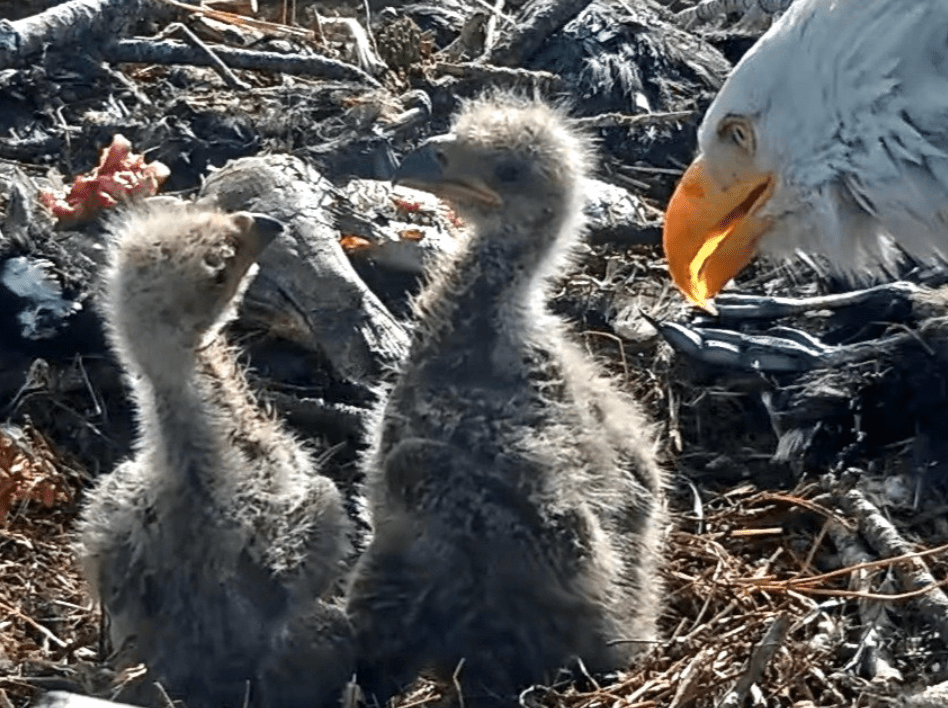


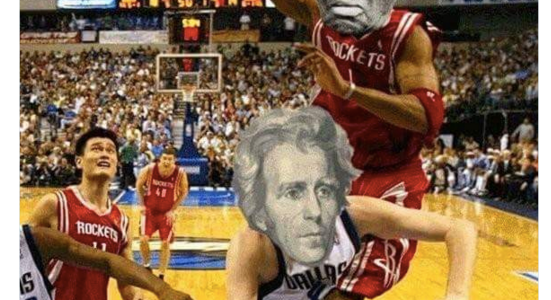
 It was an honest question, I don’t think he was being a jerk about it or anything. It just got me thinking… And that got me trolling…And that got me writing…(I’m worried this is going to become a habit).
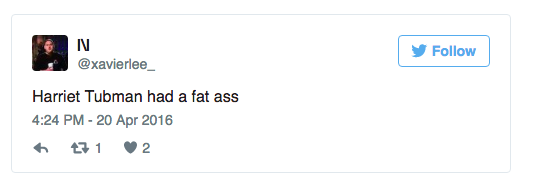
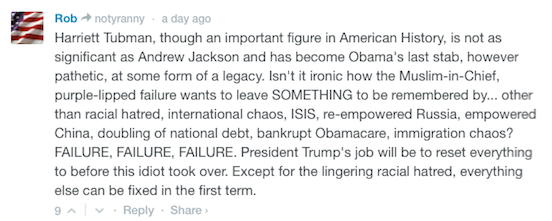
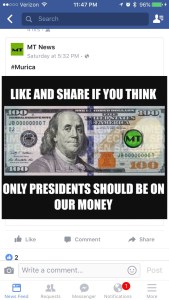 Harriet Tubman is ugly, 2) This is just one more plan by President Obama to ruin our nation (I think the term Obamanize was actually used), and 3) Most of the people complaining don’t have the faintest clue what it is they’re actually complaining about. Take the meme on the left. I seriously cried laughing. Now, the original poster, MT News, meant this as a knock against the current social media outcry over the Tubman decision. BUT, as it has been passed about the webs it has become a representation of hatred as more and more people share it because they believe the sentiment behind the wording, rather than understand the irony behind the image.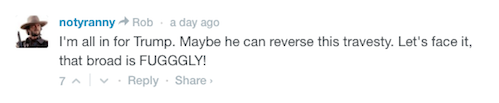




 While in office Jefferson organized the Louisiana Purchase, doubling the size of the US and sent Lewis and Clark on their mission to explore that new territory. He stood up against the British and signed into law an act forbidding the importation of slaves into the United States. His policies toward Native Americans were seen as more humane than most (for the time period) and he believed in a policy of assimilation for most indigenous people. He is regarded as one of the greatest presidents of our country. BUT…Jefferson was a slave owner. He participated in the buying, selling, and inheriting of slaves. He owned over 600 slaves in his lifetime and supposedly had an affair with one of his slaves, Sally Hemings, who bore his illegitimate children. In all honesty, Jefferson is one of my favorite presidents, but there is definitely room to debate his position on our current currency because of his role in slavery.
 I thought my anger reached its fullest potential following the Super Bowl. I remember so many people taking to Facebook and Twitter, blasting Beyonce, Bruno Mars, Cold Play, The NFL, CBS, even Pepsi for allowing Beyonce to perform “Formation” during the Half Time Show. The comments ranged from laughable to ignorant to downright racist and hateful. I trolled various Facebook posts and Twitter feeds and found myself experiencing a myriad of reactions and emotions. Like so many people I don’t know what to do, what to say, how to help. I can’t fathom a scenario where I can do anything to fix this, but I can also no longer stay quiet. I started this post months ago, then I put this aside and debated whether I should post it. Then Alton Sterling was shot and killed yesterday and the need to say something has once again risen up in my soul. This time I’m going to allow it a voice.
 Seriously, when a black person tells you that their lives are different from yours because you are white and they are black, that’s not a dig against you. They aren’t blaming you for it or asking you to apologize for it, they’re simply stating a point of fact. The truth is, we don’t like this fact because deep down, in places we don’t like to talk about at parties, this fact makes us feel all icky and yucky inside. It makes us feel guilty and it makes us feel bad about being white (which, as we’ve established, isn’t our fault). I mean, why should we feel bad about being white when we had no control over who our parents are and what our heritage is? IT’S NOT OUR FAULT!!! Cue the violins and listen closely. NO ONE IS SAYING IT IS. The only person making you feel guilty for being white is you. The only person making you think you’re supposed to apologize for slavery and Apartheid and Jim Crow is you. The only person making you proclaim that you are not a racist is you. Black people are NOT white shaming you. They’re just asking you to lend their point-of-view some credence. They’re asking you to stop denying racism because admitting it makes you feel uncomfortable. They’re asking you to have an open and honest conversation with them about race. They’re asking you to stop pretending that you know what it is like to be black in America because YOU DON’T.
