I started writing this five years ago—something I planned to read at the 50th anniversary party we had in the works. But a global pandemic had other plans and crushed both our gathering and my beautiful Canva invitations in one fell swoop (I still have them).
I found the piece again a few months ago while combing through some old files. It was titled “Geez, Jack,” and curiosity made me open it. I’d honestly forgotten I’d even started it. But I knew right away: I needed to finish it by April 11.
As I reworked it, updated the timeline, and started searching for a title, I laughed out loud when “Pack the Car and Beat the Kids” rose to the top—because honestly, that would be on brand. But sixty years of love deserves a little more reverence.
So instead, here’s a tribute to the chaos, the steadiness, the laughter, and the legacy of two people who somehow raised all of us without entirely losing their minds.
Mostly.
They’ve been together for sixty years—five years of young love, scribbled poems, and dreaming out loud… followed by fifty-five years of marriage. A lifetime, really.
They met at Clarion University—young, curious, and entirely unaware of the life they’d build together. My mum thought he was the richest man she’d ever met. Why? Because he’d eaten in a restaurant once and owned a sport coat. And in her world, that was pure glamour.
My dad? He was a hopeless romantic from the very beginning. He wrote poems to her in the margins of his class notes, passed them in secret, folded like treasure—and then tucked them away to be found on her 75th birthday. He loved her then the way he still does now—with gentle consistency and a wink of mischief.
They came from different worlds. Sandy was a good girl—hard-working, well-behaved, always chasing good grades and never stepping out of line. Jack was a loner—quiet but stubborn, following no one’s rules but his own. She grew up in a big, loud, messy family. He came from a stricter, harsher household where love wasn’t spoken often. Each of them was searching for something—something steadier, something new. She found a quiet rebel with a crooked smile and a kind heart. He found a woman and a family he could love—one that loved him back.
They were both education majors. My mum, Sandy, was born to teach—patient, fierce, and full of heart. My dad, Jack, not so much. He worked odd jobs, took what came, and held our family together on a patchwork of effort and determination until he started his own company. And then he was gone a lot—traveling for work, chasing something steadier for us.
Our childhood vacations weren’t picture-perfect. They were tacked onto his business trips to exotic destinations like Corpus Christi and St. Louis. Someone was always picking their nose, climbing over a railing, not touching someone else, or refusing to wear pants—and that was just in the photos. We cried to be carried, got speeding tickets in St. Louis, threw up at every rest stop, accidentally set the dunes on fire, and broke down more times than I can remember. Once, we even roasted hermit crabs on the car floor driving home from Corpus Christi.
We were the Griswolds on vacation before that shit was even cool.
We slept on cots in crowded bedrooms, melting in the wet Florida heat. We camped in a pop-up that had to be carefully balanced at night or it would tip. We laughed when my brother got stuck with the “table” as his bed in that old camper. And we fought over the way-back seat like it was prime real estate. We learned the phrase “beat and pack,” and we knew exactly what it meant.
But no matter where we were, the Easter Bunny always found us, and Santa always knew to leave our presents—even when we weren’t home.
And somehow, that’s how the meaning of home was built.
Home wasn’t just a place.
It was an idea.
It was a world.
It was something we could leave and still belong to.
The world was big, and they wanted us to see it—but we always came back.
We could always come back.
They planted seeds that rooted.
And they held.
They’re holding still.
We were poor by most standards. Hand-me-downs from the church, from neighbors. But we didn’t really notice. Or maybe we just didn’t care. We had each other—and that was everything.
As we grew, the business took root. Mum went back to the classroom (and became my fourth-grade teacher, which deserves its own award). We started taking vacations to the beach—a real vacation, the kind you take on purpose. We packed boogie boards (the cheap, white Styrofoam kind) into the Suburban and stopped twenty times to rearrange them because the squeaking was making Jack insane. We still broke down at toll booths. We still threw up at rest areas. We still fought over the back seat.
We continued to grow. And as we became teenagers—and awful—they did their best to temper our behavior, love us unconditionally, and set boundaries we were absolutely sure to ignore. They told us, “One day, you’ll thank me,” and quietly told themselves, “One day, they’ll thank us.”
They were right. Eventually.
They taught us how to drive. How to play ball. How to be kind to those around us who were different or had less. They attended every game. Every practice. And they bravely said goodbye as, one by one, we graduated and left home.
And when their season of raising kids began to quiet, they didn’t slow down—they just shifted gears.
They traveled back and forth between our schools to watch us play, pick us up, celebrate our birthdays. Sometimes they even showed up when we didn’t.
They never missed a thing. Not one graduation. Not a birthday. Not a communion. Even for the kids that weren’t technically “theirs.” They just showed up. Always. Even if it meant driving all night between events.
They still do.
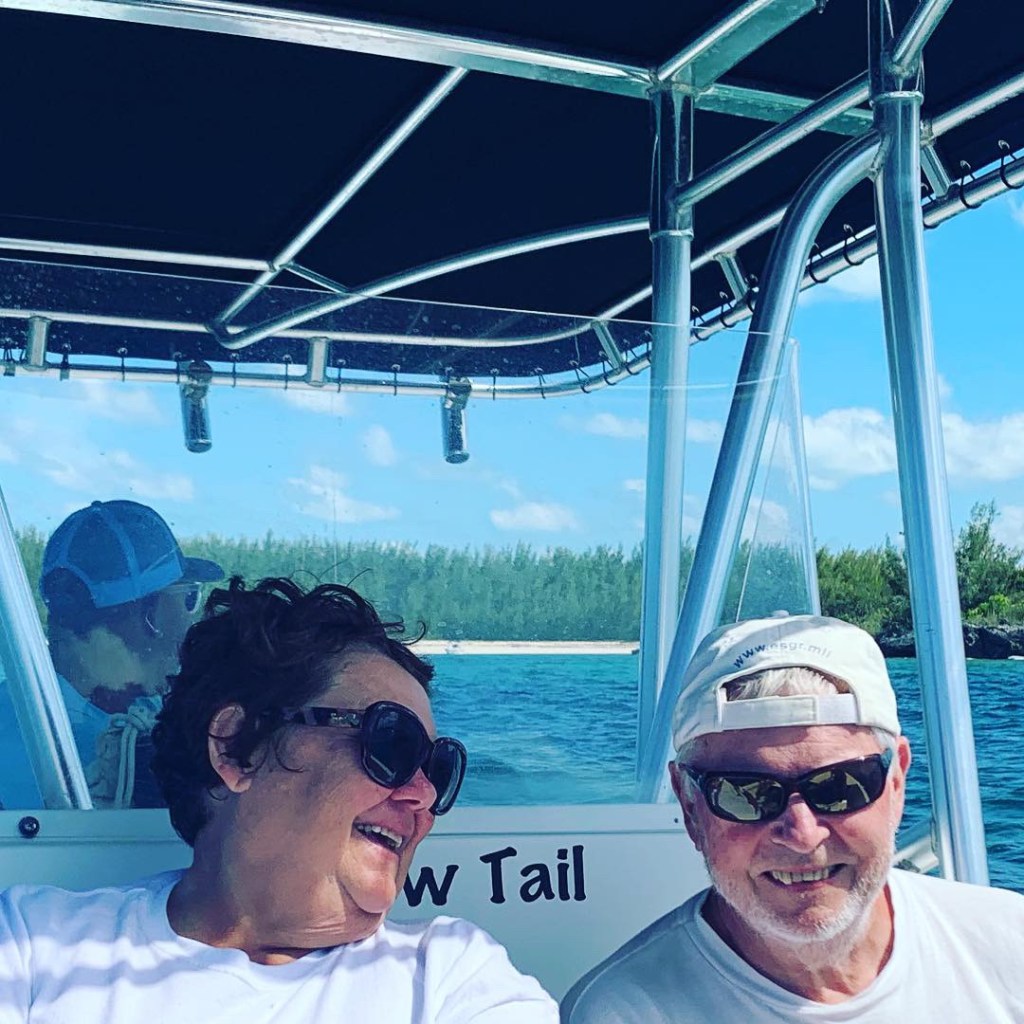
Now, at 77 and 78, with the kids grown, moved out, married, and raising children of their own, they’re road warriors—taking long, meandering road trips just because. They turn opportunity into adventure and “seek the great perhaps” better than anyone I’ve ever met. They travel the world with too much luggage, curiosity, open minds, and open hearts. They don’t worry too much—or too little—and sometimes that cavalier, caution-to-the-wind attitude drives me crazy.
They go to Steelers games and wave their terrible towels like they’re still in their twenties. They cheer at hockey games. They play bar trivia like it’s life or death. They finish jigsaw puzzles faster than I can open the box.
It’s been sixty years of laughter, grit, faith, and fierce loyalty. Sixty years of a love that was never flashy, never loud, but always steady. Always real. Over time, they developed their own language—inside jokes, whispered prayers, and unspoken understandings.
You can read a lifetime in one look.
And yeah, sometimes I call them the Bickersons. Sometimes I say, “We put the fun in dysfunctional.” Sometimes I joke with people, “I love my family—especially my dad—but he’s more like a hostage.”
But the truth is, what they have—and what they’ve built and endured—is rare. It’s precious.
It’s pretty f’n amazing…
They gave the world me (you’re welcome), and my siblings (pretty cool, I guess). And when that work was done, they set out to fill every corner of that world with the kind of love that stretches—onward and always.
Together, they built a life layered with meaning—raising children who question everything, who love deeply, who argue passionately, and who believe in possibility, because they were raised by two people who did.
Now, they spend most days doting on their grandchildren—who are growing up inside the story they started, who will one day inherit it, and who will, one day, write their own.
They are the kind of love that endures.
The kind that makes room for change.
The kind that still holds hands when no one’s looking.
Happy 55th Anniversary, Mum and Dad.
Your story reminds me to hope.
To laugh often and forgive quickly.
To wander and to want.
And to always say yes to the trip—even if it’s to St. Louis.
 Diary of A Kitten Addict