I don’t normally do this. I think about it, but I don’t ever follow it through to fruition. But, for some reason, this just feels right. It feels like something I need to do. I don’t know why. The topic of this writing certainly doesn’t need my accolades or praise or support. It has done just fine on its own for five seasons. And surely, the 5 people (hi mom) that will read this aren’t going to suddenly jump off their couches and stream this show, so again, it will make absolutely no difference, and yet, I feel compelled to write it.
Maybe it’s because I just finished the season finale of the fifth and what I believe to be the final season of the show. Maybe it’s because I cried through the last two episodes (you’ll find no spoilers here). Or maybe it’s just because a good show, like a good book, sometimes gets you and you get it. You feel something shift deep within you, and when it’s over you have this Babe moment and find yourself whispering to the credits, “that’ll do pig, that’ll do.”
For the record, I have also felt this way after watching Breaking Bad, Justified, and Ted Lasso. And I have loved, LOVED many other shows. Psych, Parks and Rec, The Boys, It’s Always Sunny, 30 Rock, Raising Hope, My Name is Earl, and Dead to Me. I’ve been known to mourn the non-renewal of shows like Stumble, Kaos, and Trial and Error.
I guess I’m telling you all of this for context. It gives you some insight into what makes me tick and what I enjoy, but it also paves the way for the understanding that what follows is not because I think this show is the greatest show ever written or produced. It’s just a show that is, in my opinion, great. But great is difficult to define.
Great is what we use to describe something that is better than the majority of our mundane lives. Great can describe a meal. It can describe a song. It can describe how we are feeling today. Great is nuanced. Great is complicated. Great is subjective.
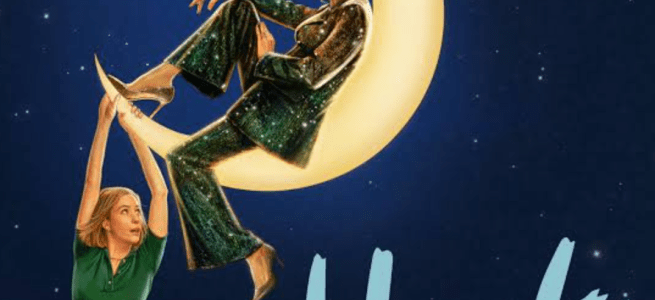
I just finished Hacks. Or at least I just finished the season 5 finale of Hacks. I don’t know if there will be a sixth season. I’ve done no research on the topic. I won’t go further because, again, you’ll find no spoilers here.
But I do want to talk about it. Because if you haven’t watched it yet, I want you to reconsider, add it to your list, and sit down this weekend and start binging it. That’s a luxury I wasn’t afforded, as I watched it in real time, waiting (im)patiently each week for the next episode to drop.
I’ll be honest, at first I thought Hacks was sort of obnoxious. The two lead characters were over-the-top in their personification of each role. Deborah Vance (Jean Smart) is a diva. Selfish. Ridiculous. Striving. Ava Daniels (Hannah Einbinder) is annoying. Selfish. Ridiculous. Striving. The rest of the cast just serves to point out that very obvious plot.
The writing and humor kept me tuned in, and after a few episodes I started seeing beyond the characters and started feeling the story. I don’t know when it actually clicked. Something worked for me after the first episode or I wouldn’t have watched the second. But somewhere over the past five seasons, I became invested. I became attached.
It wasn’t mindless drama or comedy that I watched for 30 minutes or an hour while scrolling my phone. It wasn’t background noise to fill space. It was a show I watched. And paid attention to. It was so much deeper and wittier and profound than what it marketed itself as. On the surface, it’s a show about an aging female comic who hires a young writer she is constantly at odds with. Sure, there were times during those five seasons when I was annoyed with both of them, but it was designed to evoke that response.
As the episodes and seasons progressed, the raucous humor woven throughout the show was enough to bring me back each week. There wasn’t an episode that didn’t have me laughing out loud. But somewhere along the way I realized I wasn’t watching it for the jokes anymore. I was watching because it understood something about people. Beneath all the ridiculousness, the sharp one-liners, and the constant sparring between Deborah and Ava was a story about ambition, loneliness, connection, and all the messy contradictions that come with being human.
Maybe that’s why I love books and television so much. I’m not particularly good at feelings. Emoting makes me uncomfortable. Vulnerability makes me cringe. Real life rarely comes with subtitles explaining what everyone is thinking. But sometimes a story will hand me a moment and I’ll find myself thinking, “Oh, that’s what it’s supposed to feel like.”
I think a lot of us spend our days trying not to feel too much. We distract ourselves, scroll our phones, stay busy, and keep moving. What I loved about Hacks was that it made me laugh, hard, deep, tears-in-my-eyes laughter, but it also made me pay attention. It made me think. And in a world where so many things are competing for our attention, that kind of understanding feels surprisingly rare.
And if that isn’t my definition of great, it’s probably as close as I’m going to get.
Somewhere along the way, Deborah Vance stopped being selfish and ridiculous, and Ava Daniels stopped being annoying. They became something much more recognizable: two women striving, fighting to be heard in a world that has a bad habit of silencing female voices. What initially felt exaggerated and absurd slowly began to ring true. The larger-than-life personalities, the impossible situations, and the endless obstacles weren’t there to make the story unbelievable. They were there to make it visible.
In that sense, the show feels almost Dickensian. Improbable characters with enormous personalities and complicated histories find themselves thrust into each other’s orbit and are forced to learn how to coexist, challenge each other, and occasionally save one another. It becomes a story about growth and understanding, about friendship and ambition, and about discovering something unexpected at the end of a road neither person intended to travel.
The situations may be extraordinary. Most of us will never be denied a performance at Madison Square Garden, nor will we find ourselves under a gag order for eighteen months. Yet somehow the emotions underneath those moments feel familiar. The details are different. The struggle is not.
I hate when a television show tricks me into caring. I hate when I find myself clapping at the screen, shouting advice to fictional characters who cannot hear me, or getting misty-eyed over people who do not actually exist. Yet there I was, doing exactly that.
I was cheering for Jimmy and Kayla to stand up and fight for themselves. I was quietly rooting for Deborah and Ava long before either seemed capable of admitting what they meant to one another. By the final two episodes, I wasn’t watching a comedy anymore. I was watching people I had come to care about find their way through the mess.
Maybe that’s why it hit me so hard. At 48, I have spent enough years watching people leave, come back, reinvent themselves, disappoint each other, forgive each other, and occasionally surprise each other to know that happy endings aren’t really endings at all. They’re pauses. They’re moments where, for just a second, the noise settles and everything feels right.
I hope there’s a sixth season. I’d watch every minute of it. But if there isn’t, that’s okay too. The ending felt right. Earned. Complete. When the credits rolled, I sat there for a moment, smiling like an idiot through my tears, feeling grateful that something so unexpectedly wonderful had crossed my path.
And all I could think was:
That’ll do, pig. That’ll do.