Inherited Roads

This started as a Facebook tribute to my dad on his 79th birthday. It began to wander into a narrative as winding as the roads we’ve traveled and the lives we’ve lived, and I thought, well, some things are bigger than Facebook.
Because how do you fit a lifetime of stories, sarcasm, and shared miles into a single post? Maybe this one just needed a little more room to stretch its legs, unfold its map, and find its way home.

Happy 79th Birthday to my dad: proof that genetics are wild and wonderful things. Scientifically, I’m 50% Jack and 50% Sandy (I think that’s how it works, but I’m no scientist). If you know me well enough, or look closely, you can probably pick out which pieces belong to which half. Most people think I take after my mum, and in looks, humor, wit, and occupation, I do. I don’t look like my dad, and my personality, well, that’s all Sandy.

I was the firstborn, which means I came into the world with the full, undivided attention of two brand-new parents. That lasted about thirteen months, until the twins showed up and the spotlight had to stretch a little thinner, or, on most days, disappear entirely. To this day, the family joke is about who is Mom’s favorite (spoiler alert: it’s Ryan), but I’ve always known, and still know, that I am Dad’s. Not in the spoiled or sugary “Daddy’s girl” kind of way, but in the quiet, unspoken kind that lives in the spaces between shared jokes and long drives. Ryan and Jenny might disagree, but that’s okay, they’re just jealous.

My dad is quiet and grounded. He doesn’t command attention or draw a crowd, not because he can’t, but because he doesn’t need to. He’s steady, thoughtful, the kind of man who listens more than he talks. But when he does speak, you should listen; it’s usually something important or something crudely funny you won’t want to miss. (Or, if you ask my mum, sometimes a little bitchy, but you can’t be perfect all the time.)

I’ve always been able to draw the lines between my father and me; our shared love of stories, our passion for travel and getting lost, our comfort in quiet, wild places. But if I had to pinpoint the moment that line was firmly drawn, it would be my solo trip to Colorado.

When I got to Denver and Fox Rental Cars, I bought a road map off the counter on a whim. An honest-to-God, unfold-it-till-it-rips, paper map. I didn’t need it; my phone sat on the dashboard, smug and certain, whispering turn-by-turn directions. But I wanted it.

The guy at the counter looked at me quizzically. He had tried to sell me extra insurance and a hardier 4×4 vehicle when he heard where I was headed, but all I wanted was that dusty map. My dad always had maps tucked into the seat pocket of the car, their edges soft from use, highways traced in pen, towns circled for reasons long forgotten.

When we traveled, it was always an honor to be the kid who got to hold the map and look for exits on highways where we could stop to eat or pee, and find our next stop. Maybe that’s where it started: my need to see where the road goes, to trust my own sense of direction even when I’m not entirely sure of it.

When I got into the car, I pulled a highlighter and pen from my bag (#educatorlife) and traced my route from Denver to Grand Lake on the map. I placed stars next to possible lookouts and scenic stops along the way. Then I set Google Maps to my hotel in Grand Lake and was off.

Throughout the thousand-mile journey around Eastern Colorado (Grand Lake was just my first stop), my dad was with me every step of the way. He’d text me randomly about alternate routes I might take or places he’d been that I shouldn’t miss. He shared stories and directions like breadcrumbs, as if he were quietly riding shotgun.

No one in my immediate family has an iPhone, so it was up to my friend Scott to track my location and AirTag, just in case I was eaten by a bear or fell off a cliff. Something my dad has worried about since I was old enough to walk and, therefore, climb over guardrails for a better look. In that, maybe we differ, or maybe it’s just age. Jack hates when I don’t stick to the trail or get too close to the edge.

I suppose I didn’t inherit a highly developed sense of self-preservation from either of them, which both my parents continue to lament.

There was one day in particular. I was still in Grand Lake, fresh off a weak attempt at snowshoeing, my first time. I literally took decorative (but real – they said I could use them) snowshoes from the wall of the hotel and set off with no direction or education on how to use them. Self-preservation and common sense be damned. 

Solo in Rocky Mountain National Park, I ended up buried to my neck in a snowdrift, convinced I was living out some Stephen King–esque scene and wouldn’t be found until summer when the snow finally melted. My head, sticking out of the snowmelt and mud, half-eaten by wildlife, a sad note scrawled in blood on a tissue stuffed into my bra: maybe Get busy living, or get busy dying, or simply, We all float down here. That’s all it would say. My final tribute to the world, a borrowed line from Stephen King and proof of my lack of creativity, but deep love for great literature and one-liners. (I know my dad is smiling and shaking his head as he reads this… even if it is dark.)

After that, I decided exploring from the safety of my car was the smarter option. (Second spoiler alert: I got out. It wasn’t pretty, I wasn’t happy, and I had snow lodged in places I didn’t know existed, but here I am.) I pulled out my trusty map and highlighted a few places I wanted to see. I found myself on roads with no names, no lines, no paving, and definitely no signs. I just drove.

I chased an eagle into someone’s driveway trying to snap a photo. They chased me off with a shotgun in hand. I found a quiet reservoir where an osprey fished for nearly an hour, and I sat watching, camera in hand, capturing shot after shot. (Did I mention my dad gave me my first real camera?)

There were hours where I didn’t see another car, and I didn’t care. I was free. The world was mine. And in those moments, I would find myself whispering to Moosen, “Oh, Jack would have loved this.”

Out there in the Rockies, windows cracked to the cold, I realized I wasn’t driving alone. I was following inherited roads, his steady hands on the wheel in the way I trace a ridgeline, his patience in the way I wait for the osprey to dive, his caution tugging my sleeve when I lean a bit too far over the guardrail or cross it all together. Maybe I don’t have his face, but I have his miles. And they fit.

The truth is, my dad and I have always traveled in parallel lanes. He taught me that work is a kind of motion too, something steady and honest that keeps you grounded while you chase whatever horizon calls your name.

He was a teacher by degree, but true to Jack-fashion, he obeyed no man or master. He struck out to make his own way, his own fortune, his own company, and he succeeded. Proof that if you work hard enough, and long enough, you can build something lasting. He’s still working today at his company that’s as old as I am. I wish he wasn’t. I wish he would just retire (again). I’ve told him before, Go then, there are other worlds than these. But even the words and wisdom of Roland Deschain don’t convince him. And I get it, deep in my soul, even when I don’t want to admit it, I do get it.

The company is as much his baby as his three children are. It’s his name, his reputation, his life; countless, thankless hours poured into something tangible and valuable. It defines him the way my work defines me. It’s why he answers emails at all hours, finishes quotes on deadlines, and works on vacation. I understand it because I do that too.

But legacy and creation aren’t just in what we build or where we go; they’re in what we tell and imagine. And my dad could imagine. It’s the stories, he had one for everything, that showed off his particular brand of genius. When he told them, you could see him come alive, winding up and taking off into something bizarre and fantastic, and sometimes, well, a little scary.

This was the man who used to tell us that tunnels, of which there are plenty when you grow up in Pittsburgh or travel through West Virginia and Virginia, were filled with Noop-Nops.

If you’re wondering, no one actually knows what a Noop-Nop is. But what I can tell you, with absolute certainty, is that they live in tunnels and other dark places. They have wings like bats and furry bodies; the adults can get pretty big, two or three feet tall, with sharp fangs and razor-sharp claws. If you’ve read From a Buick 8, you can see them. For the record, that book came out long after Noop-Nops were invented, Stephen King just put a face to them…at least for me.

To avoid them, you have to follow the rules. When entering a tunnel, make sure your headlights are on, your doors are locked, and your windows are rolled up tight. Sure, you’ll hear them, the tapping and banging on the car as you pass through, but if you follow the proper safety procedures, you’ll make it out the other side unscathed.

Maybe that’s where my love of scary stories really started, not with The Boogeyman or Cujo, but with the Noop-Nops. My dad invented the monsters, but he also taught me not to flinch when the dark got loud.

He had me read The Boogeyman when I was about ten, and I’ve been a horror junkie ever since.

What people who don’t like horror don’t understand is that it isn’t about the gore or the fright; it’s about the possibility. The unknown. That’s what keeps you turning the page, coming back again and again. There’s something primal about being scared; it reminds you what it means to feel everything all at once. It wakes something ancient in you, something that refuses to sleep. It sharpens your senses, pulls you back into yourself, makes your palms sweat and your heart race. For those moments, you are completely present.

When you close your eyes, the nightmares that follow are worth the fear, because you wake up exhilarated, grateful, and so incredibly alive. Fear, after all, is just curiosity in disguise. The same instinct that makes you turn the page also hums beneath your skin, a magnetic pull toward whatever waits just out of sight.

I think that’s what I really got from him, not just the map habit or the camera or Stephen King, not even the wanderlust itself, but the compass. The quiet, internal one that says, go see for yourself, and the equally quiet one that says, get home safe, check under your bed, and close the closet door. He gave me the discipline to plan a route and the nerve to ignore it. He taught me that hard work is just another kind of journey: you show up, you keep moving, you learn the road as you walk it.

In those gifts was also wonder. The kind that makes you look twice at the sky, pull over for an osprey, or read just one more chapter even when you’re scared. He taught me that life isn’t meant to be tidy or predictable; it’s meant to be lived. To take the road with no lines, the tunnel filled with Noop-Nops, the story that keeps you up at night. To love fiercely, work hard, and laugh at the absurdity of it all.

And maybe that’s what it really means to live and love and inherit a story. It’s not the paths we’re handed, but the courage to travel them. The map might tear, the ink might fade, but the compass, his compass, still points true.

Always home.
This Is Forty-Eight… Forty-Nine?

Another trip around the sun, another year older, and somehow, it still catches me off guard. Birthdays don’t make me sentimental anymore; they make me aware, of time, of motion, of all the ways I’ve changed and stayed the same. Forty-eight feels too young to feel this wise, too old to feel this curious. But here I am, somewhere in between, still learning what it means to live wide open.

Thank you to everyone who took the time yesterday to wish me a happy birthday.
Hard to believe I’m forty-eight… wait, forty-nine? No, forty-eight. I think. Anyway, it doesn’t matter.

Sometimes I panic when I think about things like, “In 2030, we’ll install new social studies standards.” Not because of the standards, but because of the 2030. I can still remember partying like it was 1999 when it actually was 1999.

I remember being ten, with parents who were forty, and thinking they were ancient. Now, with parents who are seventy-eight and seventy-nine (I’m forty-eight, nailed it; my mum is thirty years older than me), I think about how young they still are and how much time we still have left to travel and explore.

I no longer measure time in minutes and seconds. In frat parties or nightclubs or boys. I think in weeks, months, and years. About retirement plans and portfolios. Menopause and hip replacements. I curse at my phone, send words instead of memes, and laugh because, well, here I am, the person my parents warned me about. The person they swore I’d become.

I went from wild and carefree to achy and crotchety seemingly overnight.
I turn down the music when it’s raining too hard because I can’t see well when it’s too loud. I brace for the “oof” every morning when I crawl out of bed, my knees, hips, and back punishing me for the years I punished them in sports, and in stupid (but also fun) things like Spartan races.
I track BOGO sales at grocery stores and make meal plans instead of eating leftover pizza I found on my dorm room floor or tacos I found under my pillow.
I still love unsensible shoes, but I only wear them when it’s sensible.
I haven’t yet started calling the front desk when the room next door is too loud, but I might have knocked… politely… on the wall once or twice.
And I definitely don’t have TikTok.

Sometimes I stumble across old photos from college, me in my purple plastic skirt, that shiny green jacket (also plastic) I thought made me invincible, and I wish I could tell that girl how beautiful she was before the world convinced her she wasn’t. How thin she was. How unbreakable she’d turn out to be.

I wish I could tell her that strength doesn’t come from holding everything together; it comes from falling apart and finding a way back. That every wound, even the ones that felt fatal, would scab over and diminish in time. That the broken hearts and tear-soaked pillows, the stupid boys and stupid girls and cruel words, would one day shrink down into stories she’d tell with a laugh.

I wish I could tell her the world wasn’t ending every time someone ghosted her, or when she cried herself sick over someone who probably sells insurance in Ohio now and hasn’t explored the Rocky Mountains alone. That those sleepless nights were wasted on people who didn’t deserve to know her favorite songs. That those long nights waiting for the phone to ring were keeping her from hearing herself instead.

And that those wounds, now faint scars, would become the very fabric that built her. How every break had taught her to bend. Sturdy, imperfect, a little frayed in spots, but hers and hers alone. The kind of fabric that softens with time yet still holds up after every wash. The jeans you still wear from high school. The T-shirt that almost smells like him. The thread that runs through every version of herself, binding the girl she was to the woman she became.

If I could, I would pull that thread tight, trace it back to where it started, and I’d find her again, the girl who didn’t yet know what she was made of. I wish I could tell her that one day she’d grow up, be respected, earn a doctorate, and realize the people she once tried so hard to impress no longer even exist in her memory.

I’ve said before that while I have regrets, I don’t live with them, and that still holds true. They’re memories, not weights. Reminders, not anchors.

At forty-eight, I feel lucky to be where I am.

I have a handful of really good friends, the kind who’ve seen me at my worst and still answer the phone at two in the morning if I call in a panic… or a rage… or just because I’m bored. They send me pictures of otters, leave voice memos of themselves singing on my birthday, drop off authentic All Dressed chips on my doorstep, send random memes about leaves and how much the bitches love them, show up at my dissertation defense at eleven o’clock Netherlands time, still cut and style my hair, or jet off for a weekend in Vegas that we still don’t talk about. They visit me in Charlotte when they’re passing through, or maybe just to curl for the weekend, and leave little gifts on my desk because they thought of me and my ridiculous obsession with all things cats.

I have a best friend. The kind who calls when I’m too sad to talk, sits in silence while I cry, and only hangs up once she knows I’m in bed. The kind of friend who travels with me, who knows my darkest secrets, my worst impulses, my deepest fears, and still always shows up. She calls me on my shit but never judges me… at least not too harshly… and she always calls me back.

And I have a partner who celebrates me, ignores my tantrums, and indulges my weird whims. Who takes trips with me on the off chance we might see moosen. Who sometimes makes a steak dinner better than anything Ruth’s Chris or Morton’s is serving up, and who always drives me to the airport when I’m off on another adventure, kisses me goodbye, and reminds me that he loves me.

I’d go to the mattresses for all of them without a second thought, because, frankly, several of them know where the bodies are buried and because without them, I’d be lost.

I have a family that is mostly intact. I’ve felt the loss of matriarchs and patriarchs, of beloved uncles and family friends I once thought of as surrogate parents. Each loss has become a reminder of family itself, of love, of togetherness, of how deeply we belong to one another even as the seats around the table begin to empty.

Despite my general optimism, I’ve started to live more in the now, because I’ve grown acutely aware of borrowed time and the absence of any guaranteed tomorrow. I sometimes wish I’d understood the meaning of family when I was younger, but I’ve come to learn it’s something that has to grow on you over time, like moss… or maybe fungus. You have to grow old to understand what old means. You have to experience loss to comprehend the hollowness it leaves behind. And you cannot fully understand love until you’ve stepped out of the light it once provided. But each loss, in its own way, brings you closer to those who remain in the void and learn to share that space with you.

But through it all, I know I have a place to call home, even if it isn’t brick and mortar or tied to a single point on a map. Sometimes family is forty-seven text notifications bitching about the Penguins’ power play.

Home, like family, isn’t always simple. Love and belonging come with their own messiness, their own friction. Because comfort doesn’t erase complexity. Family, like time, teaches in layers; some soft, some sharp.

I’ve also felt the strain that politics and pride can bring to a family, and I’ve lamented the silliness of those silences. The stubbornness that builds walls where laughter used to live. Yet even those moments have carried lessons. I no longer see myself as a child at the whim of adults trying to mold me, or as an adult bending to other adults who believe they still can. It’s a strange dance. The old and the young, elders and youngers, respect and mutual understanding. Learning to be cautious and kind, yet steadfast, confident, and self-advocating. It has taught me to love without question or condition, and to forgive, but never to cave.

The same lessons have found their way into every other corner of my life, especially my work.

I have a job I enjoy and take pride in, work that still challenges me, that still matters. The kind of work that sometimes keeps me up at night and wears me thin, yet always reminds me I’m part of something bigger than myself, that my days are spent doing something that outlives the hours it takes.

I’ve finished my education as far as degrees go, but the learning hasn’t stopped, it’s just changed shape.
Now it looks like airports and conversations and quiet mornings where the lesson is simply being present.

I travel. I wander. I wonder. I explore.

Not to escape, but to keep learning what it means to be alive in all the small, ordinary ways, because the world keeps getting bigger the older I get, and each place teaches me something new about who I was, who I am, and who I’m still becoming.

Because no matter how far I go, the journey always circles back to me. Every new horizon holding up a mirror, reminding me that growth isn’t just about the miles traveled, but the grace earned along the way.

I still sometimes cry into my pillow, and I know heartache doesn’t fade with age, but I also know it isn’t the end of the world. It just shifts the landscape. And it’s up to me to decide how I want to walk it.

To all the little girls and boys out there, the ones who think thirty or forty is old, just wait. It really does get better with age. You get better with age.

If you have a dream, chase it. If you want to go somewhere, buy the ticket. Money is something you can always make tomorrow, and things just gather dust. Real living happens at the intersection of let’s do it and holy shit, I’m terrified.

So do it scared. Live life on the precipice between caution and the wind. That’s where the good stories come from anyway.

Because that’s the secret no one tells you about getting older, it’s not about slowing down; it’s about finally knowing when to jump.

From the Box to the Basket

Today marks three years since Edgar Allan Poe strutted out of Princeton’s Meow and into our lives, and, let’s be honest, took over the place. Three years of “good, good boy time,” midnight zoomies followed by the 3 a.m. delivery of a wet mouse toy to my chest or head, and a perfectly curated collection of stolen tampons, chapsticks, hair ties, mouse toys, and other bits and bobs he has deemed worthy of play, all artfully scattered around the house and tucked under the couch.

Poe started life as a stray in Laurinburg, NC. A woman took him in and even documented where and when she found him. Unfortunately, like so many in our society, she struggled with mental health challenges, and her desire to help stray animals turned into a devastating hoarding situation.

Three years ago, authorities seized the animals in her home, over 50 cats kept in cages stacked on top of each other. I’m told it was one of the worst situations they had ever seen. Poe spent the first two years of his life like that, caged in a garage, sitting on top of and under other cats.

He never saw the sun. He never ran after fuzzy mice, never had healthcare or regular meals. The only floor he knew was a wire grate. The only bed he knew was that same wire grate. Most of the cats they rescued could not be saved and had to be humanely euthanized. But Poe… Poe endured.

He was sent to Mac Tabby Café in NoDa, where they posted a bio of him on their Facebook page. They called him Nick Barkley. I don’t know why, I imagine it must be hard naming the hundreds of animals that come through their doors. But something in that image, that story, and those yellow eyes hooked me.

At the time, I had two cats at home: Stella Sugaree Garcia Blue and Dan the Adventure Cat Rooney. You might remember them from this story. Still, I had been quietly searching for my next true love, Stu Two if you will, and something in that gaze told me I had found him.

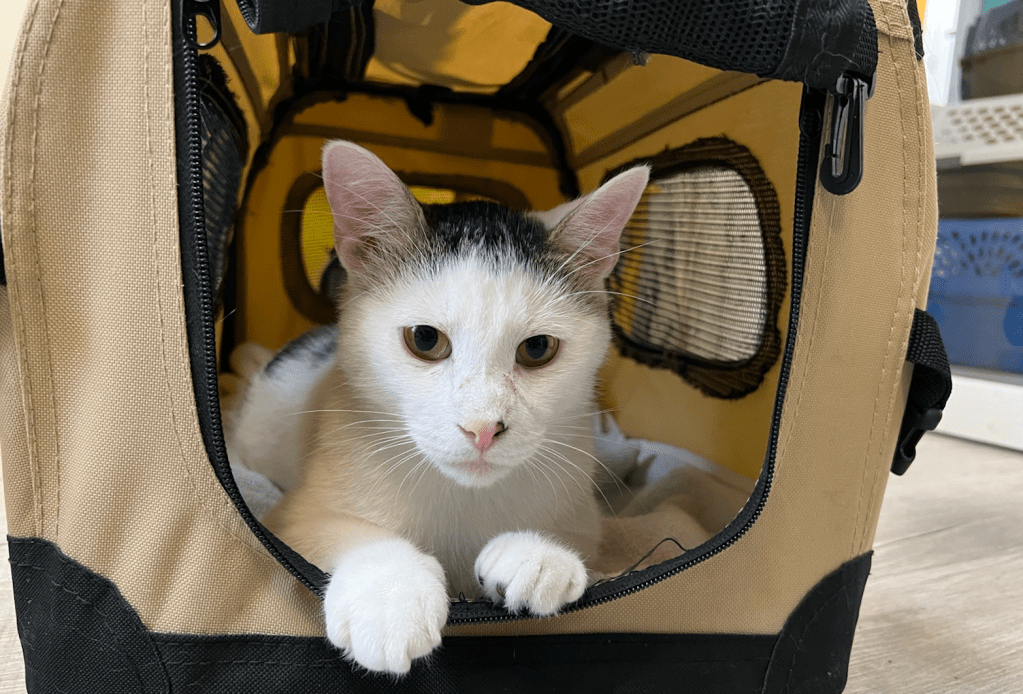
Maybe it was his coloring, all white with a few black spots and a black tail, a Stuesque remix with black where the orange had been. But I think it was more than that. In that photo, I saw a cat, call me crazy if you want, who was a fighter, a survivor. He wasn’t hiding or cowering in some corner. He was bold, upright, ready for the next episode, ready to tackle whatever life threw at him next. And I knew, whatever that was, I wanted to be there for it.

It turns out that, like most things in my life, it came with unexpected injuries. Three days after being removed from a cage and set free in a cat café, Poe (née Nick Barkley) jumped off a table and broke his leg.

They reached out to let me know I couldn’t come see him and that he would be in traction and unavailable for at least two months while he healed. It hurt, but I wasn’t deterred. I kept tabs on him as they moved him to Princeton’s Meow, a wonderful cat rescue in my hometown, while he recovered.

The only downside was that he was now back in a cage with a casted leg. His first taste of freedom had been short-lived. We visited him a few times at Princeton’s and got to love on him while he sat there, little leg in a cast, in a crate. He was so receptive to the attention, purring nonstop and rubbing his head against our hands, always asking for more.

Finally, after almost seven weeks of waiting, I got the email I had been hoping for: Nick was ready to be adopted. The message came on July 31, but we were going out of town that week, so he had to wait until August 8 for us to officially bring him home.

I set up the appointment and planned to pick him up at Princeton’s after my dentist appointment that day. We prepared the bedroom for his arrival, knowing we’d need to keep him quarantined and do a slow introduction to Rooney and Stella. Then we started counting the days.

The day I was bringing him home, I went to work with my cat carrier in the back seat. I had a dentist appointment around four to get a filling replaced, but that wasn’t going to stop me from getting my boy.

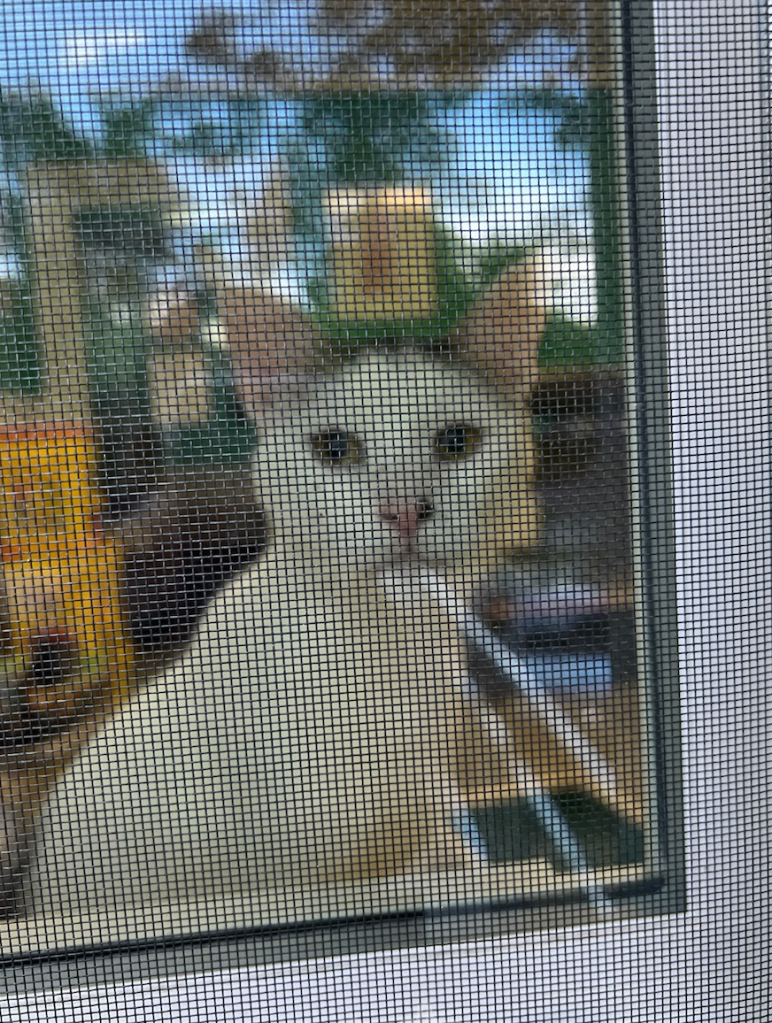
I pulled into the lot at Princeton’s and, as I was putting my car in park, a face popped up in the window.

It was Nick Barkley. It was like he had heard my car and somehow knew it was his ride to a new life and freedom. They were busy that evening with intakes and let me sit in the room he was in while they finished their work.

I waited to complete the paperwork and pay the adoption fee to take him home. There were about ten cats in that room. All of them came over, wanting pets and to play. But not Nick. He walked into the cat carrier, despite spending two years in one, and laid down. It was like he knew, this is my mom.

He came to us a little unsure, a little aloof, like he wasn’t quite convinced we were worthy of his time. We kept him in the master bedroom behind a closed door so we could ease all three cats into the transition slowly.

After about a day, he was no longer thrilled with his confinement. That night, when I used my leg to block him from escaping as I shut the door, he jumped up and nipped me on the wrist. I was startled. I remember gasping and feeling the hot sting of tears in my eyes. I’d never been bitten by a cat that wasn’t playing.

Ten minutes later, I tripped over him getting into bed and he jumped up and bit my leg. That really sent me spiraling. I was upset and unsure. I knew I hadn’t made a mistake, but I was afraid I had adopted a cat that wouldn’t be able to be socialized.

I reached out to Princeton’s, curious about his background and whether they had ever had issues with him. I assured them I wasn’t returning him, that we would stick it out, but I needed advice. They told me he had never displayed any aggression and that they were as surprised as I was.

In the end, I decided it wasn’t aggression. He was advocating for himself in the way he knew how. He wasn’t being mean, he didn’t break the skin, it didn’t even hurt, well, just my pride. It was his way of letting me know, “I’m here, I’m unhappy, and yes, a bit scared.” It was the first and last time it ever happened.

Naming him proved to be about as difficult as it was to name Rooney. I knew we didn’t want to call him Nick. My cousin is Nick, and I didn’t want a cat sharing the name of my favorite male cousin.

He was almost all white, so we called him Spooky for a bit, mostly because T found his bright yellow eyes a little off-putting. We called him Possum because my sister thought he looked like one, and to be fair, he kind of does. We called him Monkey because he reminded my BFF Morgan of Marcel from Friends, and again, he kind of does.

But none of those felt right. About two weeks into our life together, I was curating an ELA lesson on poetry and prose and I came across a picture of Edgar Allan Poe. Maybe you don’t see it, but we did. He has that same stare. That same “my mom cuts my hair” look. The expression, the eyes, even that slightly serious “I’ve seen things” energy.

And it was settled. Nick Barkley became Edgar Allan Poe. Poe, PoePoe, Poebert, for short.

I wish I could say that introducing him to the girls was smooth sailing, but it wasn’t. Even now, I’m pretty sure Rooney still hates him, and maybe us just a little, for bringing him into what had been a pretty normal and peaceful existence.

He and Stella get along well enough; they’ll play together, but she’s his age and can keep up with him. Rooney, on the other hand, has taken a different approach. They’ve settled into a relationship built mostly on mutual avoidance, with the occasional moment when he decides to stalk her and she promptly kicks his ass. Honestly, I think he’s more afraid of her than she is of him. He knows she isn’t to be trifled with.

Then there was the litter situation. We had a carefully curated system that worked beautifully with pellets in every box, no smell, easy cleanup. Poe refused to use them. His protest forced us to switch one box back to clay litter, which we all hate.

To make matters worse, he developed an irrational fear of the Litter-Robot. That led to accidents in the house and a lot of cursing over a $500 litter box rendered useless by one insolent child.

Even after three years, he’s still weird, still a bit standoffish. He doesn’t let me hold him like Stu did. He doesn’t cuddle. He isn’t a lap cat. I’ve had conversations with him about it.

Sometimes, by accident, we call him Stu. It’s a slip of the tongue, a memory, and a pain that time hasn’t completely erased. So he knows that, through no fault of his own, he is a replacement cat. In some strange way, he is Stu Two. But he’s fine with that, because he also knows I love him for him. He knows I know he isn’t Stu. Still, there are moments when the guilt creeps in.

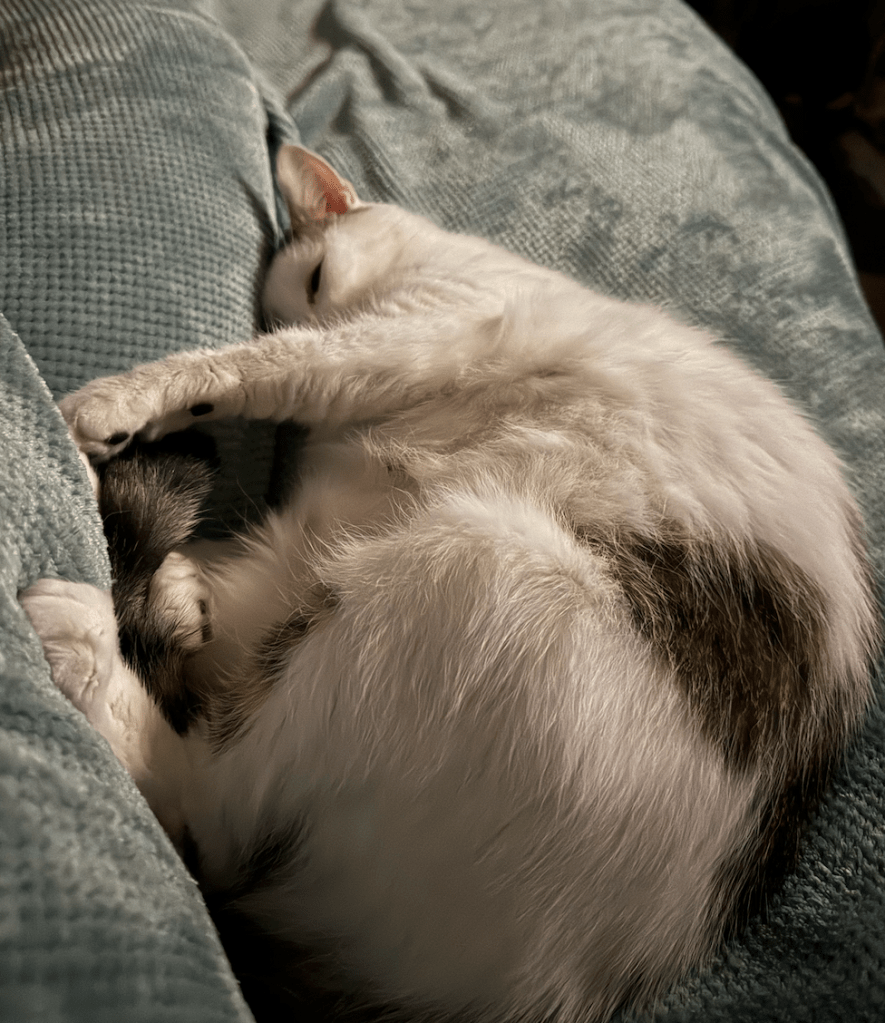
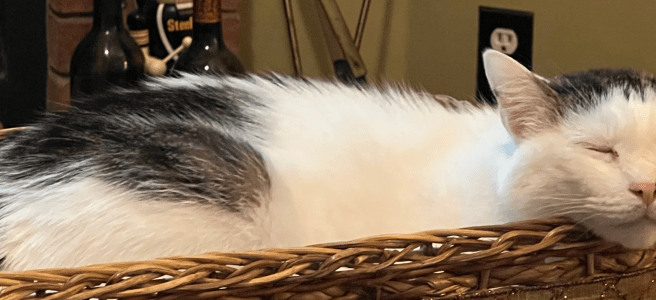
And now? He supervises everything I do, from laundry folding to dinner prep, positioning himself just far enough away to watch with judgment but close enough to insert himself if he feels like it. His daily naps sprawl across the house like feline performance art, deep and unguarded.

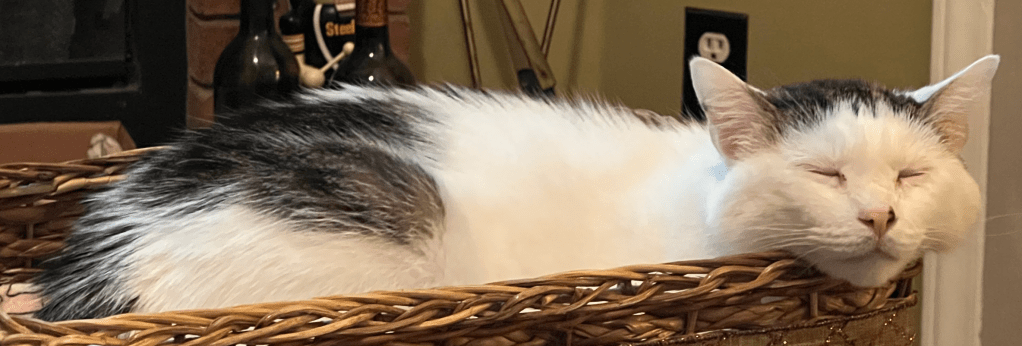
He has a basket on the coffee table where he can nap or watch TV (and yes, he really does watch TV) and be close to us, but not on us. It respects his personal space, something he values greatly, and he will remind me of that, gently, when I press my face into his.

Time heals all wounds, even the ones a cat carries after two years in a cage. Sometimes, when he’s in his basket and I call him, he’ll come and sit on my chest on the couch. He doesn’t stay long and he won’t let me pull him into an embrace, but we are slowly making adjustments and moving in that direction.

He sleeps near the door on the couch and greets me when I get home. He will roll over and show me his belly, though touching it can still be a gamble. He chirps when I open a can of food and knows exactly when it’s dinner time. He comes running every morning for his “coffee treats” and perks up at the sound of a Churu being opened in the evening.

The best thing about Poe is our nightly routine. I call it “good, good boy time,” and it’s become a running joke at the office because I’ve talked about it so much.

Every night, and I mean every night, when it starts to get close to my bedtime, usually around nine, Poe begins to get antsy in his coffee table basket. Every time I walk down the hallway he sits up and waits for me to call him.

When I am finally ready for bed I say, “Ok, Poe, it’s good, good boy time,” and he jumps up, follows me down the hallway, and hops onto the bed. We spend about ten minutes playing and getting pets, and then I lay down on my back and he crawls onto my chest to lie down.

He only stays for ten or fifteen minutes, but it’s enough. I’m a side-sleeper, so if he stayed longer I’d never get any rest. Sometimes he moves to the edge of the bed and sleeps there. Most nights, he sleeps with T and Stella, which annoys me, but what can you do?

Every morning, before my alarm goes off, no matter what time it’s set for, he comes back about ten minutes before it’s due to ring, crawls onto me, and settles in. I think it’s his way of asking me to stay just a little longer.

I know I’m just setting myself up for heartache in the end. I didn’t want to be here. I didn’t want another Stu. But I’m human, and these sorts of attachments and this sort of love are what make us unapologetically real and raw. I don’t regret it, even if I sometimes fret about it.

And Poe, that little cat in a box, stole my heart all over again, for all the same reasons, and for all the different ones that Stu did.

No matter what, he is Poe: independent, particular, a little mysterious. But in the three years since he came home, the edges have softened. He trusts me now, in his way. And sometimes, when he sits in his basket and blinks slowly at me, I think maybe he’s saying, “You did okay, Mom.”

Adopting Poe was one of those decisions that made the whole world feel a little softer. He’s proof that rescue cats rescue us right back. Here’s to many more years of purrs, headbutts, and unapologetic bed-hogging.

Happy Gotcha Day, Poe, three years as a free-range kitten, and you’ve perfected the art.

Mismanaged Mischief

Author’s Note: This story, or blog, or poem, I don’t know what is, started as a text a friend. But it had legs and substance and I kicked it around a bit until it become this idea…this…perhaps…so one night, when I had some time, and needed a distraction, I decided to write it down. But as I polished it, I realized that I needed a disclaimer, because, well because anything we put out there just does these days…

I know fireworks aren’t great. They’re bad for pets, bad for veterans, bad for the planet. They cause fires and injuries and air pollution. Trust me, I know. And it’s something I wrestle with every year. So if, after you read this, you still want to chastise me, go ahead. I get it. I won’t complain or stop you. I know the risks. In some ways, I’m a total hypocrite. I signed a petition to ban them in Big Bear Valley to protect Jackie, Shadow, Gizmo, and Sunny… so yeah, you get to do what you need to do.

But… this isn’t a love letter to fireworks.

It’s about something older. Deeper. More personal.
Louder, in a way.
Quieter, too, I suppose.

It’s about love and magic, being young, growing up, and all the feelings I have as a middle-aged woman in the thick of all the crises I’m supposed to be feeling and probably a few I’m not. About how sometimes I wish I could take it all back. A mulligan. A do-over. Another shot at 20… or 30. And how sometimes, I wonder if they feel the same. What if they got a do-over? A shot at redemption? What if they made a different decision?

I wouldn’t be mad.
Hell, I wouldn’t even know.

It’s about the stuff we don’t talk about at dinner.
And how, sometimes, in the right kind of darkness,
that ember beckons…

Mismanaged Mischief

Uncle Jack brings the big ones,
from some backroad stand in South Carolina
or maybe West Virginia,
the kind of place where warning labels fade in the sun,
and the whistle of a soft, sibilant s through missing incisors
makes she’s a beaut sound so much like Randy Quaid
you want to die from the perfection of it.

I don’t know.
I’m not there.

I’ve never been invited to witness the purchase.
But in my imagination, I’ve seen the displays,
boxes called Bamboozled, Honey Badger,
and Fresh Hot Bacon.
And I can picture,
in the most horrid, stereotypical fashion,
the man peddling large, incendiary devices
to my almost 80-year-old father.
And I always wonder:
is this the year someone loses a digit?

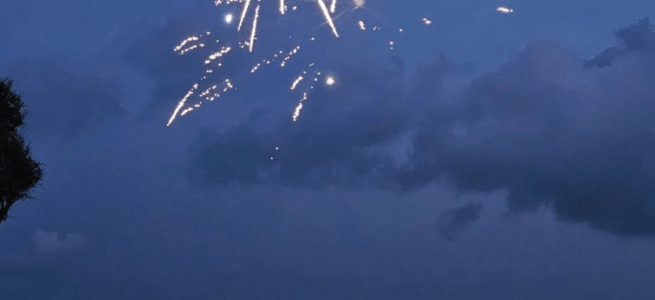
The real show will be just past dusk,
almost full dark,
when the sky softens into those pink and blue hues
the tourists take photos of.
You can set your watch by the retreat of the damp curtain
of coastal tides and winds
that lift just enough to let you breathe,
but still press against your skin
so you don’t forget:
Summer makes you earn the night.

His transformation though, that comes early.
Long before dusk or touristy Instagram memories.
I’ve never actually seen it,
but I know the signs.
Him shifting, edging backward through time
toward adolescence and carefree reverie.
It starts with a punk,
something I always call a pongee stick,
which makes him laugh every year.
I can see it burning against the dark grass,
a single ember in the shadows of almost-night.
That’s my cue to remind him
to be grown-up,
but it’s always too late.

Suddenly, he’s twelve again,
lobbing black cats at our feet,
cackling when we flinch,
tucking bottle rockets into our empty beer bottles,
tilting them skyward with the precision of chaos.
His eyes burn with youth,
mischief once gotten and long passed,
the echo of it,
a flare that won’t last.

They start moving toward the end of dock,
a wagon and small children in tow,
our only cue to get in or get out,
History has taught us to watch from the yard,
Because at least once,
he’s sent a mammoth screamer into the sound,
where some poor fish,
just swimming by and minding his own business,
met his fate,
bobbing like a question we couldn’t answer,
surfacing to threaten the fragile line between should we or
shouldn’t we.

I guess we’re all in,
we find our seats,
and suddenly the tell tale HISSSSSSS of the first wave
erupts into purple blooms and silver rain,
green comets that crackle and fly haphazardly,
red chrysanthemums that shatter into stars fall around us.

The crowd oohs.

The kids gasp.

The sparks fall in slow motion,
some of them too low
or too close,
I wonder, are the gasps awe or oh?
The displays from the island
and up and down the coast mirror ours,
and if you sit in just the right place,
it’s like watching fireworks in stereo.
And just like that,
We are all twelve again.

I no longer sit on the dock,
under the action.
In my old age, I’ve opted for a safer,
more respectable seat in the yard.

But I never stray far,
the vigilant eldest daughter,
Keeper of Mismanaged Mischief,
Queller of Fun.
I make sure,
I can still hear him.
I can still see him.

He laughs like someone
who’s forgotten to be tired.
And for a moment,
so do I.
And it’s so easy to get lost
in the pageantry of it all,
the opulence,
the awesomeness.

I look at my father.
See him.
Eyes lit with color,
mouth open in a boy’s laughter
I rarely hear anymore,
a laugh that time,
and age,
and responsibility
have folded into a box
labeled special occasions only.

I want to scream,
WAIT!
We aren’t ready yet.
It’s not time yet.

But in the dark,
the pongee stretches out,
licks the final fuse,
and the finale brings us to our feet,

I have nothing left to protest.

It’s over.

A lingering smoke cloud
and the faint smell of sulfur in the air,
the only trace
that the veil between is and was
had unraveled.
Just long enough to let him through.
But time erases,
and magic fades,
and just like that, he’s gone.

And the boy I never knew,
goes quiet again.

The squeaky wheel of the wagon returning
lets me know I’m right.

And it hits me,
maybe it isn’t fireworks we’re talking about at all.

Onward, Always… mostly

I started writing this five years ago—something I planned to read at the 50th anniversary party we had in the works. But a global pandemic had other plans and crushed both our gathering and my beautiful Canva invitations in one fell swoop (I still have them).

I found the piece again a few months ago while combing through some old files. It was titled “Geez, Jack,” and curiosity made me open it. I’d honestly forgotten I’d even started it. But I knew right away: I needed to finish it by April 11.

As I reworked it, updated the timeline, and started searching for a title, I laughed out loud when “Pack the Car and Beat the Kids” rose to the top—because honestly, that would be on brand. But sixty years of love deserves a little more reverence.

So instead, here’s a tribute to the chaos, the steadiness, the laughter, and the legacy of two people who somehow raised all of us without entirely losing their minds.

Mostly.

They’ve been together for sixty years—five years of young love, scribbled poems, and dreaming out loud… followed by fifty-five years of marriage. A lifetime, really.

They met at Clarion University—young, curious, and entirely unaware of the life they’d build together. My mum thought he was the richest man she’d ever met. Why? Because he’d eaten in a restaurant once and owned a sport coat. And in her world, that was pure glamour.

My dad? He was a hopeless romantic from the very beginning. He wrote poems to her in the margins of his class notes, passed them in secret, folded like treasure—and then tucked them away to be found on her 75th birthday. He loved her then the way he still does now—with gentle consistency and a wink of mischief.

They came from different worlds. Sandy was a good girl—hard-working, well-behaved, always chasing good grades and never stepping out of line. Jack was a loner—quiet but stubborn, following no one’s rules but his own. She grew up in a big, loud, messy family. He came from a stricter, harsher household where love wasn’t spoken often. Each of them was searching for something—something steadier, something new. She found a quiet rebel with a crooked smile and a kind heart. He found a woman and a family he could love—one that loved him back.

They were both education majors. My mum, Sandy, was born to teach—patient, fierce, and full of heart. My dad, Jack, not so much. He worked odd jobs, took what came, and held our family together on a patchwork of effort and determination until he started his own company. And then he was gone a lot—traveling for work, chasing something steadier for us.

Our childhood vacations weren’t picture-perfect. They were tacked onto his business trips to exotic destinations like Corpus Christi and St. Louis. Someone was always picking their nose, climbing over a railing, not touching someone else, or refusing to wear pants—and that was just in the photos. We cried to be carried, got speeding tickets in St. Louis, threw up at every rest stop, accidentally set the dunes on fire, and broke down more times than I can remember. Once, we even roasted hermit crabs on the car floor driving home from Corpus Christi.

We were the Griswolds on vacation before that shit was even cool.

We slept on cots in crowded bedrooms, melting in the wet Florida heat. We camped in a pop-up that had to be carefully balanced at night or it would tip. We laughed when my brother got stuck with the “table” as his bed in that old camper. And we fought over the way-back seat like it was prime real estate. We learned the phrase “beat and pack,” and we knew exactly what it meant.

But no matter where we were, the Easter Bunny always found us, and Santa always knew to leave our presents—even when we weren’t home.
And somehow, that’s how the meaning of home was built.

Home wasn’t just a place.
It was an idea.
It was a world.
It was something we could leave and still belong to.

The world was big, and they wanted us to see it—but we always came back.
We could always come back.

They planted seeds that rooted.
And they held.
They’re holding still.

We were poor by most standards. Hand-me-downs from the church, from neighbors. But we didn’t really notice. Or maybe we just didn’t care. We had each other—and that was everything.

As we grew, the business took root. Mum went back to the classroom (and became my fourth-grade teacher, which deserves its own award). We started taking vacations to the beach—a real vacation, the kind you take on purpose. We packed boogie boards (the cheap, white Styrofoam kind) into the Suburban and stopped twenty times to rearrange them because the squeaking was making Jack insane. We still broke down at toll booths. We still threw up at rest areas. We still fought over the back seat.

We continued to grow. And as we became teenagers—and awful—they did their best to temper our behavior, love us unconditionally, and set boundaries we were absolutely sure to ignore. They told us, “One day, you’ll thank me,” and quietly told themselves, “One day, they’ll thank us.”

They were right. Eventually.

They taught us how to drive. How to play ball. How to be kind to those around us who were different or had less. They attended every game. Every practice. And they bravely said goodbye as, one by one, we graduated and left home.

And when their season of raising kids began to quiet, they didn’t slow down—they just shifted gears.

They traveled back and forth between our schools to watch us play, pick us up, celebrate our birthdays. Sometimes they even showed up when we didn’t.

They never missed a thing. Not one graduation. Not a birthday. Not a communion. Even for the kids that weren’t technically “theirs.” They just showed up. Always. Even if it meant driving all night between events.

They still do.

Now, at 77 and 78, with the kids grown, moved out, married, and raising children of their own, they’re road warriors—taking long, meandering road trips just because. They turn opportunity into adventure and “seek the great perhaps” better than anyone I’ve ever met. They travel the world with too much luggage, curiosity, open minds, and open hearts. They don’t worry too much—or too little—and sometimes that cavalier, caution-to-the-wind attitude drives me crazy.

They go to Steelers games and wave their terrible towels like they’re still in their twenties. They cheer at hockey games. They play bar trivia like it’s life or death. They finish jigsaw puzzles faster than I can open the box.

It’s been sixty years of laughter, grit, faith, and fierce loyalty. Sixty years of a love that was never flashy, never loud, but always steady. Always real. Over time, they developed their own language—inside jokes, whispered prayers, and unspoken understandings.

You can read a lifetime in one look.

And yeah, sometimes I call them the Bickersons. Sometimes I say, “We put the fun in dysfunctional.” Sometimes I joke with people, “I love my family—especially my dad—but he’s more like a hostage.”

But the truth is, what they have—and what they’ve built and endured—is rare. It’s precious.
It’s pretty f’n amazing…

They gave the world me (you’re welcome), and my siblings (pretty cool, I guess). And when that work was done, they set out to fill every corner of that world with the kind of love that stretches—onward and always.

Together, they built a life layered with meaning—raising children who question everything, who love deeply, who argue passionately, and who believe in possibility, because they were raised by two people who did.

Now, they spend most days doting on their grandchildren—who are growing up inside the story they started, who will one day inherit it, and who will, one day, write their own.

They are the kind of love that endures.
The kind that makes room for change.
The kind that still holds hands when no one’s looking.

Happy 55th Anniversary, Mum and Dad.
Your story reminds me to hope.
To laugh often and forgive quickly.
To wander and to want.
And to always say yes to the trip—even if it’s to St. Louis.

The Bridge Between Them and Tomorrow

My parents are my unsung heroes.
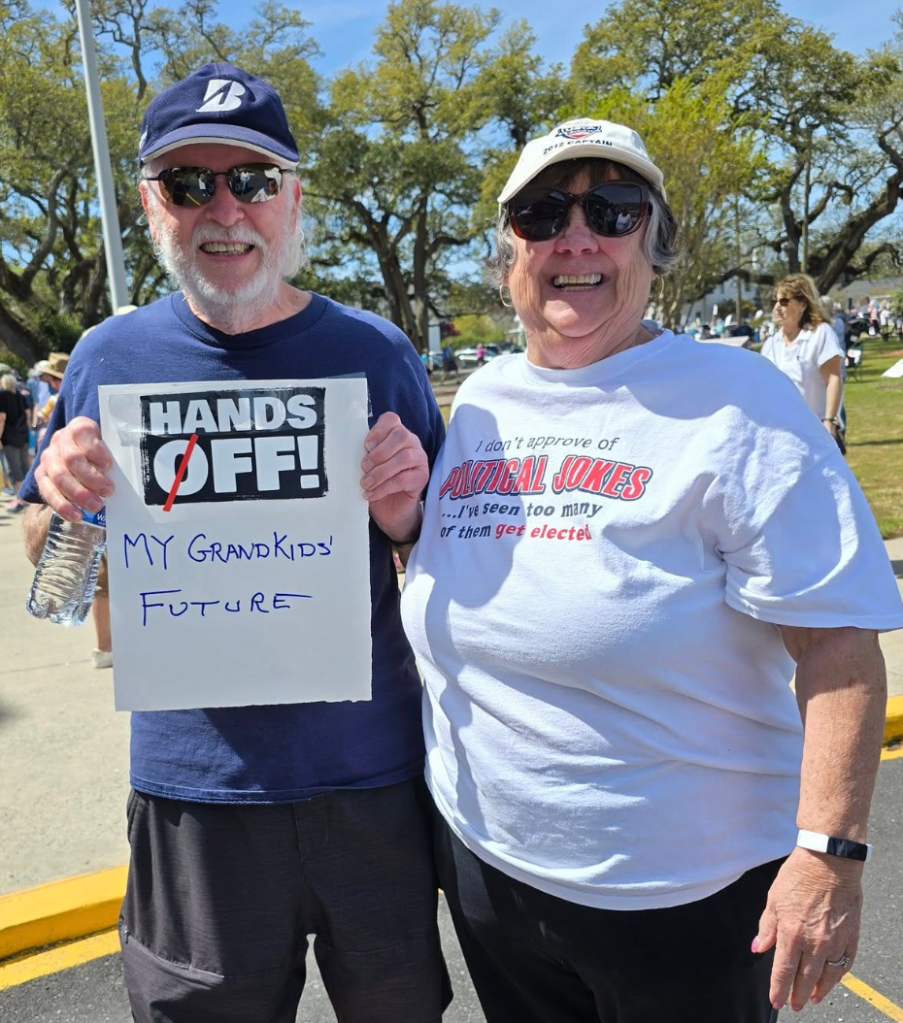
They are 77 and 78 years old, and today they laced up their sneakers, grabbed their signs, and marched for justice and freedom—not for themselves, but for the future.

They spent their Saturday standing in the sun—
my dad holding a sign that said Hands off my grandkids’ future,
my mum in a t-shirt about how practical jokes become elected officials.

They marched for freedom.
For justice.
For a tomorrow they might not live to see, but refuse to give up on.

I don’t have children of my own.
I have a niece, a nephew, and a chorus of cousin-kids who orbit close enough to feel like gravity.
They weren’t born to me, but they belong with me.
I’ve cheered them on, watched them grow, held their tiny hands and big feelings.

And I have the thousand students who’ve passed through my classroom and heart across 24 years of teaching.

Family isn’t always about lineage.
Sometimes, it’s about proximity and heart.

These ARE my kids.

And my parents marched for them.

I am who I am because of who my parents were to me when I was growing up.
They weren’t perfect.
They weren’t my best friends.
They usually said no.
They were something more.

They gave me a framework for courage.
They taught me to pay attention—to ask questions, challenge injustice, and stand my ground even when my knees trembled.
They showed me that kindness isn’t weakness—it’s a decision you make over and over again.
That your voice matters, even when it shakes.

Even when it’s silenced.

That ordinary people can do extraordinary things—quietly, consistently, and with stubborn hope.

And I have tried to build something from it.
Something others can walk across.

And today—decades later—they’re still out there showing up.
For my kids.
For your kids.
For our world—the one they still believe in, still carry hope for.

That’s legacy.
That’s love in motion.
That’s the kind of inheritance that matters most.

Not all inheritance comes through a will.
Some of it marches beside you,
sunscreen on, homemade signs in hand,
calling out, “Hands off their future.”

That’s what I got from them.
Not money.
Not land.
But courage.
Conviction.
Movement.

And the kind of love that doesn’t sit still when the world needs it.

That’s the legacy—and the inheritance—I carry forward.
And I take every step with purpose—
to honor them,
as a promise to carry the weight when they are no longer able.

And it’s the one I hope I’m passing on, too.

We are the bridge between them and tomorrow.

A Feral Kind of Grace

A Feral Kind of Grace
An Introduction

I was a barefoot child with skinned knees and a bike. A dreamer. I spent my days wandering wooded backyards and whispering creeks, convinced the trees could talk if I just listened hard enough. I grew up in a house where silence was both sacred and suspicious, where love was present but not always soft. I learned early how to be useful. How to read a room. How to disappear—and still be watching. I longed to ride horses on the sand and hear the stories the stars were waiting to tell.
I learned to look.
I learned to listen.
I learned to fight.

In my teens, I wanted to be everything at once—pretty, smart, daring, good.
I failed at most of it. Spectacularly and often.
I fell in love too fast, burned too hot, gave too much, and had my heart broken twice into so many pieces I never thought I’d be whole again.

I wrote poems in the margins of my math homework and still day dreamed about horses and far away places. A testament to my math ability now. I carried secrets in my soul that I would whisper to the stars at night as an offering. I wore armor made of sarcasm and kindness, hoping no one would see how much I wanted to be seen and accepted.
I played sports, earned mostly As, and frustrated my teachers with my questions and inability to sit still. I stopped listening. I stopped looking. But I didn’t stop fighting.

I went to college at 17—young, free, and determined to be someone else. I rewrote my name and my story numerous times in the span of 5 years. Each fractured being still clinging somewhere inside me today. I had moments of great success… and moments we still don’t talk about when the family gets together. I don’t live with my regrets, but I have them. I came out mostly unscathed and mostly whole, and wholly scared of life in the real world.

Early adulthood didn’t make anything clearer or easier—it just raised the stakes.
I was more momentum than foresight. I got engaged, broke that off. I married too soon and I stayed too long. I made lifelong friends, and lost touch with the brokenness inside me. I gathered names and scars and learned how to leave.
I learned I was strong enough to be alone.
I went back to school, accumulated degrees and the debt that came with them.
But I also learned how to stay.

Somewhere in the middle of all that, I found my person.
Not the one I expected—but the one who made space for every version of me I’d been carrying.
The one who didn’t flinch when I unfolded. He wasn’t the person I wrote, he was the person I re-read. And I started listening again. I started seeing instead of just looking. I didn’t stop fighting.
But I did learn to let go.
I’ve learned to apologize. To move forward.
To move on.

And now?
At 47, I’ve made my home somewhere between squirrel whisperer, crazy cat lady, reluctant domestic goddess, and freelance adventurer.
I try to be a good neighbor—I’ll bring in your mail, water your plants, or loan you a cup of sugar.
But I also leave snacks out for the raccoons and possums. T calls it “yard garbage”. I refuse to rake leaves—for the bees, sure. But also because raking feels like erasing. And my weekends are not meant for labor. I have a menagerie in my yard and my own squirrel army. They have names. They know me, and I know them. One year, I had to apologize for the corn that started growing in random places around the neighborhood. I’ve since switched to peanuts.
They haven’t sprouted—but not for lack of enthusiastic burial.

I like things a little wild.
I thrive in the casual chaos I’ve perfected.
My garden is unkempt and honest but always full of mint.
My house is full of books, mismatched mugs, lonely socks, and stories I haven’t told yet.
I pick up a rock from every place I visit—and I can name them all if you ask.
I’m stitched together with equal parts wit, mayhem, grief, and grace.
I’ve softened with time.
But I still bite when cornered.

I write because I have to. There’s something ancient and restless in me that insists on being translated and heard.
I edit because I want to. Because I believe words can be shaped like prayers or knives—depending on what’s needed.
I never believe the work is done.

My writing lives at the intersection of memory and invention.
It is rooted in truth—even when the story is fiction.
Especially then.

I have an alter ego named Echo.
She reminds me to write when I forget.
She holds up a mirror when I’m trying to disappear.
Most days, she just reminds me to feed the squirrels.

This is where the stories begin.

What I’ve Learned About Hurt, Healing, and Becoming an Ally

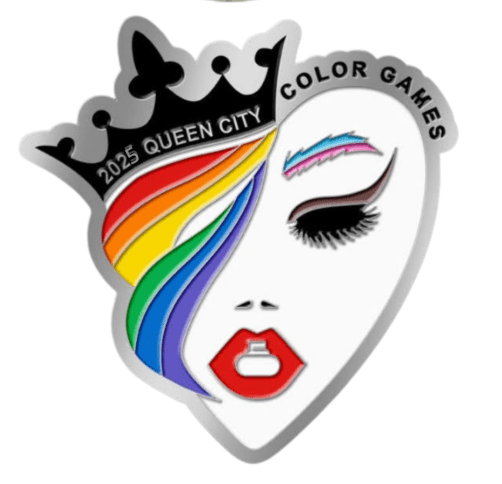
This weekend, I curled in the 2nd annual Queen City Color Games at the Charlotte Curling Club—our Pride Bonspiel. Teams came from all over—California, New Jersey, Maryland, Georgia, Nebraska, South Dakota, and, of course, North Carolina. It’s a joyful, love-filled celebration of LGBTQIA+ curlers and allies. And while it’s a “funspiel,” the kind with funky rules and wild costumes, it’s also something much deeper: it’s a space where being fully yourself isn’t just tolerated—it’s expected. It’s embraced. When it ended, I didn’t just feel grateful. I felt a quiet ache—because I realized how rare and sacred that kind of space is. A space where no one has to shrink. Where no one has to explain who they are. Where belonging isn’t earned—it’s assumed and it is respected.

And that got me thinking…

So here’s my story. Bear with me. I ramble. I meander. I wander about before I get to the point, and I talk too much—but I promise I’ll get there.

When I was a kid, I was an athlete. I started swimming competitively when I was four, and by ten, I was practicing twice a day and lifting weights. I was good—probably better than good. I had Quad-A times in backstroke and breaststroke before I hit double digits. I still might hold a record at my old summer pool in backstroke. In college, I realized my 15-16 breaststroke time beat the record on the wall at Clarion’s pool, whatever, I guess maybe I should have been a swimmer. But that’s not the point.

I picked up softball around ten, then volleyball. Again—good. Competitive. Driven. If you know me, you know: I like to win. I worked hard, I played harder, and I loved every second of it. I was strong. Fast. Lean. The kind of kid who could throw a football better than most of the boys and outrun just about anyone in gym class.

And that’s when things started to shift.

Junior high hit—and suddenly, being athletic wasn’t cool anymore. Not for girls. Not in the early ’90s. Today we’re starting to celebrate female athletes, but trust me—we didn’t back then.

My nickname became “Leaman”—a jab at my strength and build. My short haircut didn’t help. Curling my bangs and teasing them out over a bowl cut couldn’t mask it. But I tried. I invested in that purple hairspray with the kangaroo on the can, and I looked mostly ridiculous for most of junior high and high school.

But dammit, I wanted to fit in.

I can still smell that horrid grapeness when I think about seventh grade.
And it didn’t help—not really. No amount of hairspray or makeup could cover who I was.

I was called a boy. A lesbian. A dike.
I didn’t even fully understand those words at the time—but I knew they were meant to cut.
To other me.

So I guess I did what a lot of kids do—I tried to shrink myself. I tried to fade into the background and be less… me and more… them.

I stopped working so hard. Hell, I even got kicked off my swim team for something stupid—a cute boy I had a crush on told me to drop a weight down the stairs, and I did. I’ll never forget my coach’s last words: “You wanted to quit, Leanne. So just quit.” I remember walking out to my mum’s car after practice, knowing it was over. Knowing they had already paid through the month—and that would be an issue. But I didn’t care. I was over it.

I wanted to be liked. I wanted to be wanted. I wanted to blend in, not stand out. And somewhere along the way, I started to resent the very thing I used to love most about myself.

That’s not a pity story. I’m not sharing it for sympathy. I’m sharing it because—while that nickname stung, while that teasing changed some things for me—I could walk away from it. I could brush off the labels because they weren’t true for me. I wasn’t gay. I wasn’t different, not in the way they meant. The insults were misfires. And eventually, I grew out of them.

But here’s the thing.

What if I wasn’t straight?

What if I was that kid—that teammate, that friend—who those labels stuck to because they weren’t insults… they were my identity? An identity I had to hide.  An identity I couldn’t laugh off or join the teasing from the sidelines. An identity that made me feel othered in spaces that were supposed to be safe.

What if I couldn’t brush it off?

What if, at 13 or 14, those words didn’t just sting—they burrowed in and told me I didn’t belong?

What if they made me question my own worth?

As an adult, I’ve been lucky. I’ve built a life I’m proud of—a career I love, a partner who grounds me, and a sense of self that took decades to grow into. But maybe more than anything, I’ve built friendships that last. The kind that don’t flinch when life gets hard. The ones you carry with you to the grave and beyond.

Y’all, I have friends I’d take a bullet for. Friends who’d help me bury a body (kidding… mostly).

They’re the people who make my world beautiful.

Who give my life meaning.

They’re the people who see all of me—and choose me anyway. 

They remind me, every single day, that there is still light and love in this world.

And they are worth fighting for.

And if you find yourself judging—whether it’s this post, this event, or the LGBTQIA+ community as a whole—I’d invite you to pause.

Ask yourself what that judgment is rooted in.

Because if it comes from fear, or tradition, or something you were taught long ago—I get it. That’s real. We’re all raised to believe in something. Our lives are built on the foundations laid by our parents, our churches, and the geopolitical landscape we grew up in. And that’s hard to shake.

But so was my fear of spiders.
And the deep end of the pool after I saw Jaws.

Sometimes our fears aren’t real.
Sometimes they’re invitations—to question the world around us, to expand our beliefs, to build systems that are more compassionate and more robust.
Sometimes fear is just a construct—rooted in old stories and ancient hurts we were never meant to carry forever.

Any good therapist will tell you: fear binds you. It holds you back.
But with enough practice, it can be overcome.

And fear—real or imagined—is not a reason to deny someone else dignity, safety, or love.

You don’t have to understand someone’s identity to honor their humanity.

So here’s what I want to say and am finally getting around to…

Some of my friends are straight. Some are gay. Some are trans. Some are nonbinary. Some are Black, Brown, White, Neurodiverse, or Disabled. And here’s the truth: I love my people fiercely. I love them not in spite of who they are, but because of it. And I hope—deep in my bones—that I’ve been the kind of friend they can count on. The kind that shows up, not just in comfort, but in courage.

And lately, I’ve been thinking a lot about what it really means to be an ally. Not just a safe person. Not just someone who “accepts” others. But someone who actively refuses to let hate or exclusion go unchecked.

Because when I think about that 13-year-old version of me—hurt by a nickname but able to walk away from it—I realize what a privilege that was. I wasn’t targeted for who I was. I was targeted for what people assumed.

And yes, that hurt. But it wasn’t soul-deep. It didn’t threaten my safety, my future, or my place in the world. It may have changed me—but honestly, I can’t even say for sure.

What I can say is that it stayed with me. It still does.

It shows up in the quiet calculations. The moments where I weigh what I can say and what I can’t. Where I toe the line to stay safe. Where I hold back because of fear, because of image, because of self-preservation.

And I get it. I get why people stay quiet. I’ve done it too.

But I also know this:
I can’t be an ally.
I can’t be a friend.
I can’t stand up and fight if I’m still hiding behind that fear.

So here it is. So here’s what I want to say.

For so many kids, that fear, that “otherness”, that lack of belonging – it exists and persists and resonates. Every day. All the time. In every moment.

And that’s why spaces like our Pride Bonspiel matter. That’s why allyship matters. Not just in June. Not just at one event. But in the way we live, love, parent, teach, coach, vote, speak, and show up.

If you’ve never had to question whether you belonged in a locker room, on a team, at a family dinner, or in your own church—you’re already playing with privilege. That doesn’t make you a bad person. But it does mean you have a responsibility.

Because allyship isn’t passive. It’s not a rainbow sticker or a hashtag or a one-time event. It’s action. It’s speaking up when it would be easier to stay quiet. It’s making space when you’ve always had it. It’s listening—really listening—when someone tells you what it’s like to be “othered.”

It’s about creating more spaces like this bonspiel. Spaces where love shows up in funky costumes and everyone belongs just as they are.

I’m still learning. Still listening. Still trying to do better.
But I know this much:

You are safe here.
You are loved here.
You belong here.

And if I’ve missed the mark—if I’ve made this more about me than I meant to—please tell me. I want to do better. I want to be better. That’s what allyship means to me.

Selah.

On growing old.. and other stuff…

I think, as we grow older and then even older still… As we move through those stages of grief, “I’m almost 30”, “I’m almost 40”, “fuck, I’m almost dead”… I think we start to notice the passing of time as an actual marching. Time (or the lack thereof) becomes something you can feel. Time becomes something you can almost hear. It is that steady “boom, boom, boom” that hits you deep in the bones. You can feel the pulse in your arches and in your toes, it mutes your ears and makes you feel like you are listening to life underwater. It stops you in your tracks and you spend a dizzying few moments recalibrating and acclimatizing to the world around you.

I think, we start to realize how important it is to remember and connect with the people who knew you when you were young and when you were you. How else do we explain having 951 friends on Facebook? And I’m not talking about the you that grew and grew up. Not the you that learned, and fucked up and recovered. Not the you that has now settled into a groove that includes baby aspirin and fish oil. Not that you. Not the you that haunts your dreams and wakes you with “what if”. Not that you. Not the you, when there was a you, that had the world in front of them and choices to make… choices that now are life and the status quo… that now define YOU… And still, that you, the one that always persists and is always there, lurking, just beneath the surface, that comes at you with more choices: Is this the life you chose? Is this what you want? Is this all there is? Is this milk still good?”  

I think, we spin our wheels and fight the current, but just like salmon coming to spawn, we too come home. We become our parents and we grow old (the thing we fear most as children). But we also realize that our parents, they gave all to have us, they had dreams and lives and choices to make, and they chose us. And be it out of kindness or couth they never mention it. The other paths. The other possibilities. The other lives. And then you realize that every possible road was only possible because it was carefully and concertedly cultivated for you. Because someone else gave that to you. 

I think, you decide to choose the next road wisely and with intention and deliberation. You decide, this time will better, more brilliant, more WHATEVER… so you can honor that. So you can BE that. And then you realize that you don’t have to be more, not for them, you’re enough. You learn you can atone for the stupid shit you did, or you said when you were 14 and angry and thought you knew everything. When the worst thing in the world you could be was your parents. When you didn’t know or understand them. When you didn’t know what they are or who they are. When you were young, and dumb, and so woefully without worry or care. You will always carry that guilt, but you know, they’ve forgiven you.

I think, eventually, it all comes to pass. All of it. The triumphs, the falls, the absolute abysmal moments that make you ashamed to this day. You know the ones, that you don’t talk about at Christmas or when the family finds themselves all together because of death or birth or some other ritual we pay homage to. Those moments we talk around and laugh about carefully. Those moments that will always remind you of your past indiscretions and failures. But all of that…All of it… It. Comes. To. Pass. You find forgiveness and grace in acceptance. You find laughter in the impossible. You find stories and moments and memories in the midst of the most unlikely of places. You finally learn to understand, and then you finally understand. And if you are lucky, you learn to embrace what has been in front of you all these years. You learn that it’s all so much bigger than you. You learn that giants and fairytales have human and humble beginnings. You learn that life isn’t finite but it is final. And despite it all, you learn to smile.