Onward, Always… mostly

I started writing this five years ago—something I planned to read at the 50th anniversary party we had in the works. But a global pandemic had other plans and crushed both our gathering and my beautiful Canva invitations in one fell swoop (I still have them).

I found the piece again a few months ago while combing through some old files. It was titled “Geez, Jack,” and curiosity made me open it. I’d honestly forgotten I’d even started it. But I knew right away: I needed to finish it by April 11.

As I reworked it, updated the timeline, and started searching for a title, I laughed out loud when “Pack the Car and Beat the Kids” rose to the top—because honestly, that would be on brand. But sixty years of love deserves a little more reverence.

So instead, here’s a tribute to the chaos, the steadiness, the laughter, and the legacy of two people who somehow raised all of us without entirely losing their minds.

Mostly.

They’ve been together for sixty years—five years of young love, scribbled poems, and dreaming out loud… followed by fifty-five years of marriage. A lifetime, really.

They met at Clarion University—young, curious, and entirely unaware of the life they’d build together. My mum thought he was the richest man she’d ever met. Why? Because he’d eaten in a restaurant once and owned a sport coat. And in her world, that was pure glamour.

My dad? He was a hopeless romantic from the very beginning. He wrote poems to her in the margins of his class notes, passed them in secret, folded like treasure—and then tucked them away to be found on her 75th birthday. He loved her then the way he still does now—with gentle consistency and a wink of mischief.

They came from different worlds. Sandy was a good girl—hard-working, well-behaved, always chasing good grades and never stepping out of line. Jack was a loner—quiet but stubborn, following no one’s rules but his own. She grew up in a big, loud, messy family. He came from a stricter, harsher household where love wasn’t spoken often. Each of them was searching for something—something steadier, something new. She found a quiet rebel with a crooked smile and a kind heart. He found a woman and a family he could love—one that loved him back.

They were both education majors. My mum, Sandy, was born to teach—patient, fierce, and full of heart. My dad, Jack, not so much. He worked odd jobs, took what came, and held our family together on a patchwork of effort and determination until he started his own company. And then he was gone a lot—traveling for work, chasing something steadier for us.

Our childhood vacations weren’t picture-perfect. They were tacked onto his business trips to exotic destinations like Corpus Christi and St. Louis. Someone was always picking their nose, climbing over a railing, not touching someone else, or refusing to wear pants—and that was just in the photos. We cried to be carried, got speeding tickets in St. Louis, threw up at every rest stop, accidentally set the dunes on fire, and broke down more times than I can remember. Once, we even roasted hermit crabs on the car floor driving home from Corpus Christi.

We were the Griswolds on vacation before that shit was even cool.

We slept on cots in crowded bedrooms, melting in the wet Florida heat. We camped in a pop-up that had to be carefully balanced at night or it would tip. We laughed when my brother got stuck with the “table” as his bed in that old camper. And we fought over the way-back seat like it was prime real estate. We learned the phrase “beat and pack,” and we knew exactly what it meant.

But no matter where we were, the Easter Bunny always found us, and Santa always knew to leave our presents—even when we weren’t home.
And somehow, that’s how the meaning of home was built.

Home wasn’t just a place.
It was an idea.
It was a world.
It was something we could leave and still belong to.

The world was big, and they wanted us to see it—but we always came back.
We could always come back.

They planted seeds that rooted.
And they held.
They’re holding still.

We were poor by most standards. Hand-me-downs from the church, from neighbors. But we didn’t really notice. Or maybe we just didn’t care. We had each other—and that was everything.

As we grew, the business took root. Mum went back to the classroom (and became my fourth-grade teacher, which deserves its own award). We started taking vacations to the beach—a real vacation, the kind you take on purpose. We packed boogie boards (the cheap, white Styrofoam kind) into the Suburban and stopped twenty times to rearrange them because the squeaking was making Jack insane. We still broke down at toll booths. We still threw up at rest areas. We still fought over the back seat.

We continued to grow. And as we became teenagers—and awful—they did their best to temper our behavior, love us unconditionally, and set boundaries we were absolutely sure to ignore. They told us, “One day, you’ll thank me,” and quietly told themselves, “One day, they’ll thank us.”

They were right. Eventually.

They taught us how to drive. How to play ball. How to be kind to those around us who were different or had less. They attended every game. Every practice. And they bravely said goodbye as, one by one, we graduated and left home.

And when their season of raising kids began to quiet, they didn’t slow down—they just shifted gears.

They traveled back and forth between our schools to watch us play, pick us up, celebrate our birthdays. Sometimes they even showed up when we didn’t.

They never missed a thing. Not one graduation. Not a birthday. Not a communion. Even for the kids that weren’t technically “theirs.” They just showed up. Always. Even if it meant driving all night between events.

They still do.

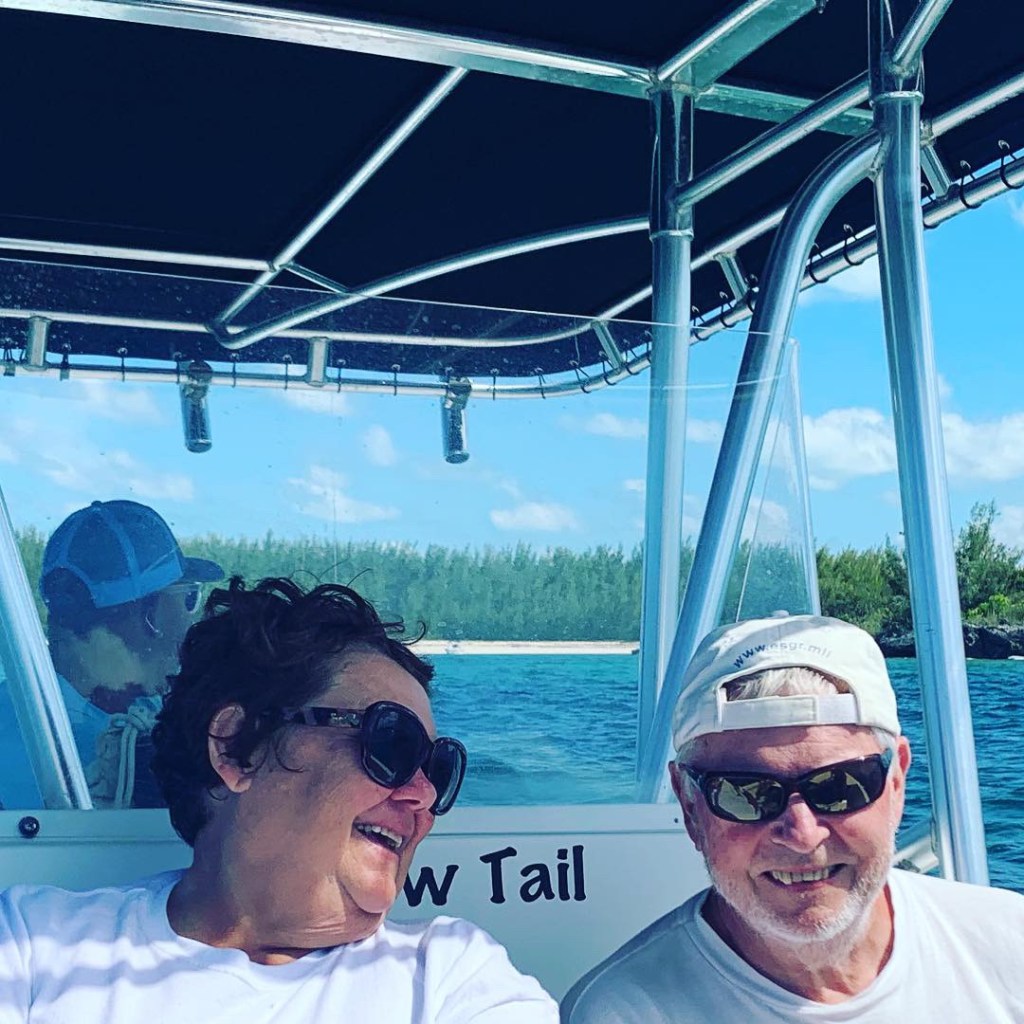
Now, at 77 and 78, with the kids grown, moved out, married, and raising children of their own, they’re road warriors—taking long, meandering road trips just because. They turn opportunity into adventure and “seek the great perhaps” better than anyone I’ve ever met. They travel the world with too much luggage, curiosity, open minds, and open hearts. They don’t worry too much—or too little—and sometimes that cavalier, caution-to-the-wind attitude drives me crazy.

They go to Steelers games and wave their terrible towels like they’re still in their twenties. They cheer at hockey games. They play bar trivia like it’s life or death. They finish jigsaw puzzles faster than I can open the box.

It’s been sixty years of laughter, grit, faith, and fierce loyalty. Sixty years of a love that was never flashy, never loud, but always steady. Always real. Over time, they developed their own language—inside jokes, whispered prayers, and unspoken understandings.

You can read a lifetime in one look.

And yeah, sometimes I call them the Bickersons. Sometimes I say, “We put the fun in dysfunctional.” Sometimes I joke with people, “I love my family—especially my dad—but he’s more like a hostage.”

But the truth is, what they have—and what they’ve built and endured—is rare. It’s precious.
It’s pretty f’n amazing…

They gave the world me (you’re welcome), and my siblings (pretty cool, I guess). And when that work was done, they set out to fill every corner of that world with the kind of love that stretches—onward and always.

Together, they built a life layered with meaning—raising children who question everything, who love deeply, who argue passionately, and who believe in possibility, because they were raised by two people who did.

Now, they spend most days doting on their grandchildren—who are growing up inside the story they started, who will one day inherit it, and who will, one day, write their own.

They are the kind of love that endures.
The kind that makes room for change.
The kind that still holds hands when no one’s looking.

Happy 55th Anniversary, Mum and Dad.
Your story reminds me to hope.
To laugh often and forgive quickly.
To wander and to want.
And to always say yes to the trip—even if it’s to St. Louis.
What I’ve Learned About Hurt, Healing, and Becoming an Ally

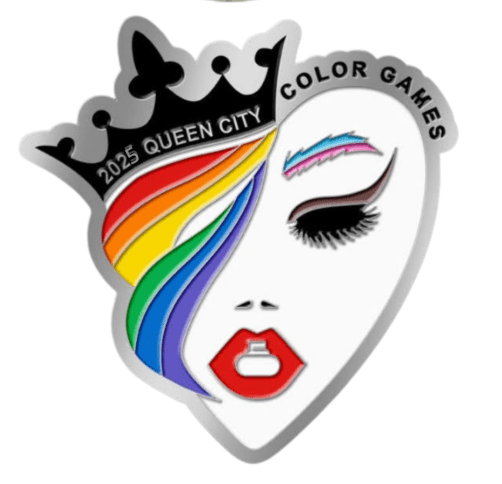
This weekend, I curled in the 2nd annual Queen City Color Games at the Charlotte Curling Club—our Pride Bonspiel. Teams came from all over—California, New Jersey, Maryland, Georgia, Nebraska, South Dakota, and, of course, North Carolina. It’s a joyful, love-filled celebration of LGBTQIA+ curlers and allies. And while it’s a “funspiel,” the kind with funky rules and wild costumes, it’s also something much deeper: it’s a space where being fully yourself isn’t just tolerated—it’s expected. It’s embraced. When it ended, I didn’t just feel grateful. I felt a quiet ache—because I realized how rare and sacred that kind of space is. A space where no one has to shrink. Where no one has to explain who they are. Where belonging isn’t earned—it’s assumed and it is respected.

And that got me thinking…

So here’s my story. Bear with me. I ramble. I meander. I wander about before I get to the point, and I talk too much—but I promise I’ll get there.

When I was a kid, I was an athlete. I started swimming competitively when I was four, and by ten, I was practicing twice a day and lifting weights. I was good—probably better than good. I had Quad-A times in backstroke and breaststroke before I hit double digits. I still might hold a record at my old summer pool in backstroke. In college, I realized my 15-16 breaststroke time beat the record on the wall at Clarion’s pool, whatever, I guess maybe I should have been a swimmer. But that’s not the point.

I picked up softball around ten, then volleyball. Again—good. Competitive. Driven. If you know me, you know: I like to win. I worked hard, I played harder, and I loved every second of it. I was strong. Fast. Lean. The kind of kid who could throw a football better than most of the boys and outrun just about anyone in gym class.

And that’s when things started to shift.

Junior high hit—and suddenly, being athletic wasn’t cool anymore. Not for girls. Not in the early ’90s. Today we’re starting to celebrate female athletes, but trust me—we didn’t back then.

My nickname became “Leaman”—a jab at my strength and build. My short haircut didn’t help. Curling my bangs and teasing them out over a bowl cut couldn’t mask it. But I tried. I invested in that purple hairspray with the kangaroo on the can, and I looked mostly ridiculous for most of junior high and high school.

But dammit, I wanted to fit in.

I can still smell that horrid grapeness when I think about seventh grade.
And it didn’t help—not really. No amount of hairspray or makeup could cover who I was.

I was called a boy. A lesbian. A dike.
I didn’t even fully understand those words at the time—but I knew they were meant to cut.
To other me.

So I guess I did what a lot of kids do—I tried to shrink myself. I tried to fade into the background and be less… me and more… them.

I stopped working so hard. Hell, I even got kicked off my swim team for something stupid—a cute boy I had a crush on told me to drop a weight down the stairs, and I did. I’ll never forget my coach’s last words: “You wanted to quit, Leanne. So just quit.” I remember walking out to my mum’s car after practice, knowing it was over. Knowing they had already paid through the month—and that would be an issue. But I didn’t care. I was over it.

I wanted to be liked. I wanted to be wanted. I wanted to blend in, not stand out. And somewhere along the way, I started to resent the very thing I used to love most about myself.

That’s not a pity story. I’m not sharing it for sympathy. I’m sharing it because—while that nickname stung, while that teasing changed some things for me—I could walk away from it. I could brush off the labels because they weren’t true for me. I wasn’t gay. I wasn’t different, not in the way they meant. The insults were misfires. And eventually, I grew out of them.

But here’s the thing.

What if I wasn’t straight?

What if I was that kid—that teammate, that friend—who those labels stuck to because they weren’t insults… they were my identity? An identity I had to hide.  An identity I couldn’t laugh off or join the teasing from the sidelines. An identity that made me feel othered in spaces that were supposed to be safe.

What if I couldn’t brush it off?

What if, at 13 or 14, those words didn’t just sting—they burrowed in and told me I didn’t belong?

What if they made me question my own worth?

As an adult, I’ve been lucky. I’ve built a life I’m proud of—a career I love, a partner who grounds me, and a sense of self that took decades to grow into. But maybe more than anything, I’ve built friendships that last. The kind that don’t flinch when life gets hard. The ones you carry with you to the grave and beyond.

Y’all, I have friends I’d take a bullet for. Friends who’d help me bury a body (kidding… mostly).

They’re the people who make my world beautiful.

Who give my life meaning.

They’re the people who see all of me—and choose me anyway. 

They remind me, every single day, that there is still light and love in this world.

And they are worth fighting for.

And if you find yourself judging—whether it’s this post, this event, or the LGBTQIA+ community as a whole—I’d invite you to pause.

Ask yourself what that judgment is rooted in.

Because if it comes from fear, or tradition, or something you were taught long ago—I get it. That’s real. We’re all raised to believe in something. Our lives are built on the foundations laid by our parents, our churches, and the geopolitical landscape we grew up in. And that’s hard to shake.

But so was my fear of spiders.
And the deep end of the pool after I saw Jaws.

Sometimes our fears aren’t real.
Sometimes they’re invitations—to question the world around us, to expand our beliefs, to build systems that are more compassionate and more robust.
Sometimes fear is just a construct—rooted in old stories and ancient hurts we were never meant to carry forever.

Any good therapist will tell you: fear binds you. It holds you back.
But with enough practice, it can be overcome.

And fear—real or imagined—is not a reason to deny someone else dignity, safety, or love.

You don’t have to understand someone’s identity to honor their humanity.

So here’s what I want to say and am finally getting around to…

Some of my friends are straight. Some are gay. Some are trans. Some are nonbinary. Some are Black, Brown, White, Neurodiverse, or Disabled. And here’s the truth: I love my people fiercely. I love them not in spite of who they are, but because of it. And I hope—deep in my bones—that I’ve been the kind of friend they can count on. The kind that shows up, not just in comfort, but in courage.

And lately, I’ve been thinking a lot about what it really means to be an ally. Not just a safe person. Not just someone who “accepts” others. But someone who actively refuses to let hate or exclusion go unchecked.

Because when I think about that 13-year-old version of me—hurt by a nickname but able to walk away from it—I realize what a privilege that was. I wasn’t targeted for who I was. I was targeted for what people assumed.

And yes, that hurt. But it wasn’t soul-deep. It didn’t threaten my safety, my future, or my place in the world. It may have changed me—but honestly, I can’t even say for sure.

What I can say is that it stayed with me. It still does.

It shows up in the quiet calculations. The moments where I weigh what I can say and what I can’t. Where I toe the line to stay safe. Where I hold back because of fear, because of image, because of self-preservation.

And I get it. I get why people stay quiet. I’ve done it too.

But I also know this:
I can’t be an ally.
I can’t be a friend.
I can’t stand up and fight if I’m still hiding behind that fear.

So here it is. So here’s what I want to say.

For so many kids, that fear, that “otherness”, that lack of belonging – it exists and persists and resonates. Every day. All the time. In every moment.

And that’s why spaces like our Pride Bonspiel matter. That’s why allyship matters. Not just in June. Not just at one event. But in the way we live, love, parent, teach, coach, vote, speak, and show up.

If you’ve never had to question whether you belonged in a locker room, on a team, at a family dinner, or in your own church—you’re already playing with privilege. That doesn’t make you a bad person. But it does mean you have a responsibility.

Because allyship isn’t passive. It’s not a rainbow sticker or a hashtag or a one-time event. It’s action. It’s speaking up when it would be easier to stay quiet. It’s making space when you’ve always had it. It’s listening—really listening—when someone tells you what it’s like to be “othered.”

It’s about creating more spaces like this bonspiel. Spaces where love shows up in funky costumes and everyone belongs just as they are.

I’m still learning. Still listening. Still trying to do better.
But I know this much:

You are safe here.
You are loved here.
You belong here.

And if I’ve missed the mark—if I’ve made this more about me than I meant to—please tell me. I want to do better. I want to be better. That’s what allyship means to me.

Selah.